


Surface Selection in Play Landscapes: The Role of Natural and Artificial Grass
The debate between natural and artificial grass in play environments is often oversimplified. This article from Davies White Ltd Landscape Architects is based on their 25 year’s experience designing children’s gardens and playgrounds. It aims to reframe the discussion, exploring how surface materials should be selected and combined within play landscapes to balance safety, durability, environmental responsibility and the quality of children’s experience.
A Balanced, Design-Led Perspective
Artificial grass has become one of the most visible and, at times, polarising materials in contemporary play landscape design. Its rapid adoption, particularly within schools and public play spaces, reflects genuine operational pressures around durability, maintenance and year-round usability, while its growth has been accelerated by strong commercial promotion.
At the same time, opposition within the landscape profession has intensified, with organisations such as the Society of Garden Designers, the Royal Horticultural Society and the Landscape Institute raising concerns around environmental impact, biodiversity loss and the long-term consequences of replacing living systems with synthetic materials. Between these competing positions sits a more important and often overlooked question: not whether artificial grass is inherently good or bad, but how surface materials should be selected, combined and applied within play landscapes to achieve safe, durable and ecologically responsible outcomes. From the perspective of a Chartered Landscape Architect, this requires moving beyond product-led decisions toward a design-led approach, where each surface is chosen in response to function, context and long-term performance.
In practice, the increasing use of artificial grass is rarely driven by design intent alone. More often, it is a response to the failure of natural grass to perform under specific conditions, particularly where high levels of foot traffic, poor drainage, limited sunlight or constrained maintenance regimes prevent a living lawn from establishing or recovering effectively. The familiar outcome is worn, compacted and often unusable ground, particularly in educational and public settings where consistent access is required.
Artificial grass is therefore frequently introduced as a corrective measure, restoring usability and visual consistency. However, this framing is important. It positions artificial grass not as a default design solution, but as a response to underlying performance limitations, which in many cases may be better addressed through considered design, soil strategy, drainage and appropriate allocation of use.
Natural Grass as the Foundational Surface
Natural grass remains the primary and most valuable surface within play landscapes. As a living system, it delivers environmental, ecological and experiential benefits that cannot be replicated by synthetic alternatives. It supports biodiversity at both soil and surface level, contributes to urban cooling, assists with water infiltration and provides a dynamic, sensory-rich environment for children. These qualities are particularly significant in early years settings, where engagement with natural materials plays a direct role in physical, cognitive and emotional development.
However, the performance of natural grass is conditional. Its success depends on appropriate soil construction, drainage, light availability, maintenance regimes and, critically, the intensity and type of use. Where these factors are not aligned, degradation is inevitable. The challenge, therefore, is not whether to use grass, but how to design and manage it so that it can succeed within the specific demands of the site.
Artificial Grass as a Targeted Surface System
When considered within a broader palette of landscape materials, artificial grass should be understood not as a replacement for natural grass, but as one of several engineered surface systems.
Its role is comparable to that of wetpour, bonded rubber mulch or other impact-absorbing surfaces, each of which is selected based on performance requirements rather than aesthetic preference.
Artificial grass is most appropriately used where:
- Wear levels exceed the recovery capacity of natural grass
- Consistent, year-round usability is required
- Defined safety performance is needed beneath equipment
- Site conditions prevent reliable grass establishment
Schools and Nursery Play Environments
Within schools and early years settings, surface selection must balance safety, durability and usability with developmental and environmental considerations. Natural grass performs well where use can be managed and conditions allow for recovery. In practice, however, many school environments operate under constraints that make this difficult to achieve.
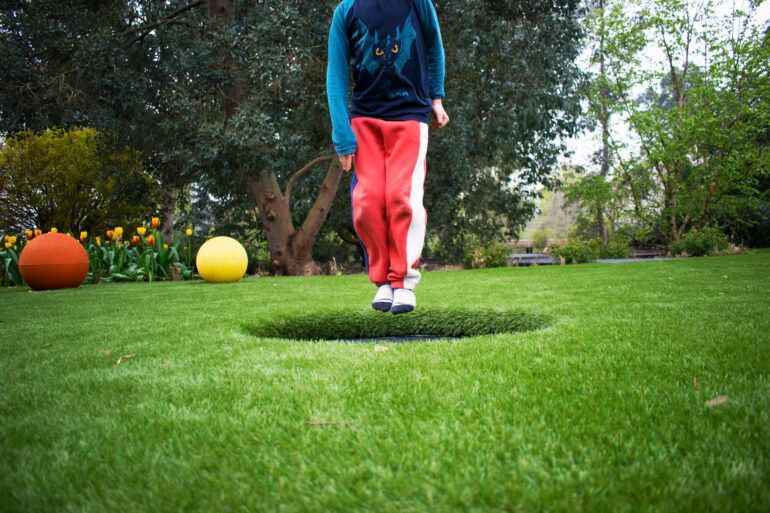
Artificial grass can provide a practical solution in specific areas, such as high-wear circulation routes, intensively used play zones or beneath fixed equipment requiring consistent impact attenuation. In these situations, it supports continuous use and reduces disruption caused by mud and surface degradation.
However, the replacement of entire play areas with artificial grass removes valuable opportunities for children to interact with living environments. Where natural grass cannot be sustained, alternative design responses should be considered, including shade-tolerant planting, reinforced grass systems or a shift toward more diverse, nature-based play landscapes.
Public Playgrounds and Community Landscapes
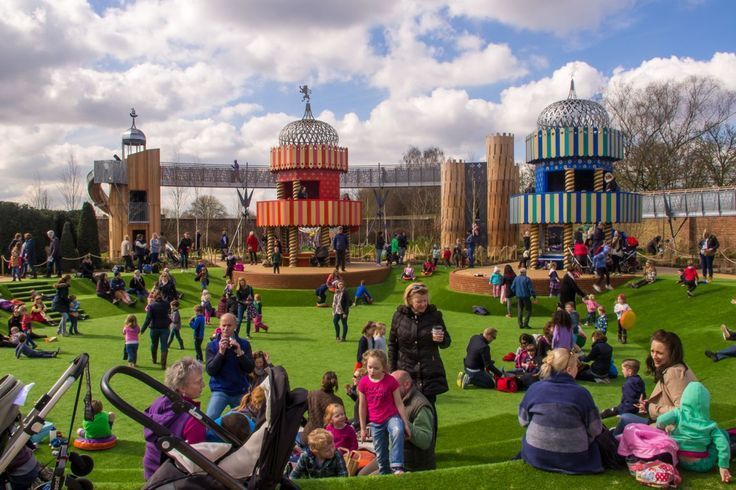
Public play environments introduce additional pressures, including continuous use, limited maintenance resources and the need for long-term durability. In these contexts, artificial grass can play a role in stabilising high-use areas, supporting shaped landforms and providing consistent surface performance. Despite this, the importance of retaining natural grass within public landscapes remains significant. Open grassed areas support informal play, social interaction and biodiversity, contributing to the wider value of public space. Over-reliance on synthetic surfaces risks creating environments that are visually uniform but ecologically and experientially limited.
Safety and Performance
Both natural and artificial grass can meet safety requirements when properly specified and maintained. In the UK and across Europe, impact attenuation within playgrounds is typically assessed in accordance with BS EN 1177, which defines the performance of surfacing in relation to critical fall height and the reduction of head injury risk.
Natural grass is recognised as a suitable impact-absorbing surface under certain conditions. However, its performance is inherently variable and can decline significantly with compaction, wear or waterlogging, reducing its ability to meet consistent safety thresholds over time.
Artificial grass systems, when combined with appropriate sub-base construction and shock-absorbing layers, can be designed to achieve defined impact attenuation values in line with these standards. In this context, the grass itself is not the safety surface, but part of a wider engineered system.
The key consideration is therefore not simply the material, but how the entire surface build-up performs under real conditions of use, wear and maintenance.
Environmental and Long-Term Considerations
The environmental implications of artificial grass are increasingly recognised within the landscape profession. Concerns include the loss of biodiversity, the introduction of microplastics into soil systems, heat retention and end-of-life disposal challenges. These issues have prompted a broader shift toward nature-based and climate-responsive design approaches.
This does not necessitate the complete exclusion of artificial grass, but it does require a more critical and selective approach to its use. Materials should be assessed not only on immediate performance but on their contribution to long-term environmental quality.
Pros and Cons - Natural Grass
Advantages
- Supports biodiversity and soil ecosystems
- Provides natural sensory experience
- Regulates temperature and improves microclimate
- Absorbs rainfall and reduces runoff
- Capable of self-repair under appropriate conditions
Limitations
- Requires ongoing maintenance
- Sensitive to overuse and poor conditions
- Performance varies seasonally
- Vulnerable to compaction and drainage issues
Pros and Cons- Artificial Grass
Advantages
- High durability in intensive use areas
- Consistent year-round usability
- Predictable performance characteristics
- Compatible with safety systems
- Reduced routine maintenance
Limitations
- No ecological or biodiversity value
- Manufactured from synthetic materials
- Can retain heat in direct sunlight
- Finite lifespan with disposal implications
- Requires careful specification and installation
Beyond Grass: Other Play Surface Systems
While this article focuses on the role of natural and artificial grass, it is important to recognise that most play landscapes are formed from a broader palette of surface materials. These include engineered systems such as wetpour rubber and bonded rubber mulch, reinforced grass systems, as well as loose and natural materials including play-grade sand, bark and wood chip, alongside modular safety matting.
Each of these surfaces offers different characteristics. Wetpour provides consistent and certified impact attenuation in high-risk areas, while bonded rubber systems (Tiger Mulch) offer a more visually sympathetic alternative with similar performance attributes. Reinforced grass systems, such as cellular confinement or matting systems that allow natural grass to grow through a stabilised grid, provide a hybrid solution, retaining the ecological and visual benefits of grass while improving durability and, when correctly specified, supporting impact attenuation requirements in certain applications.
Alternative playground surface materials
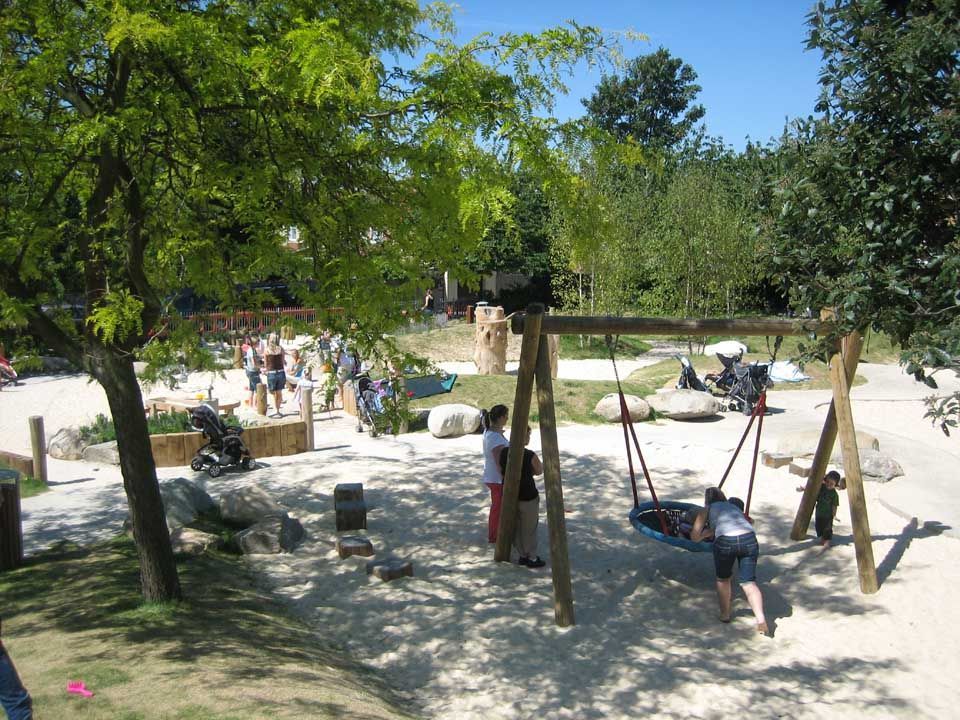
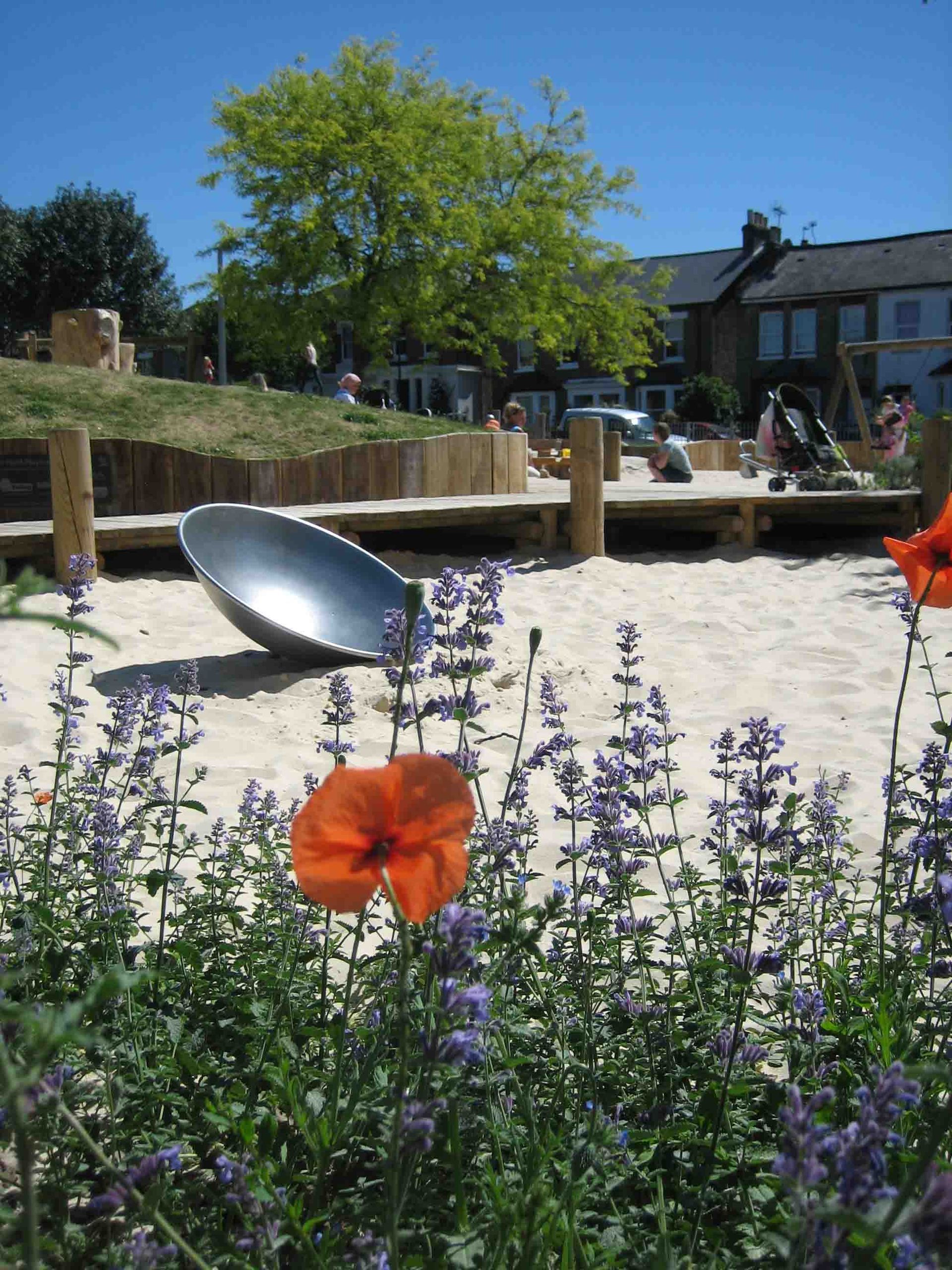
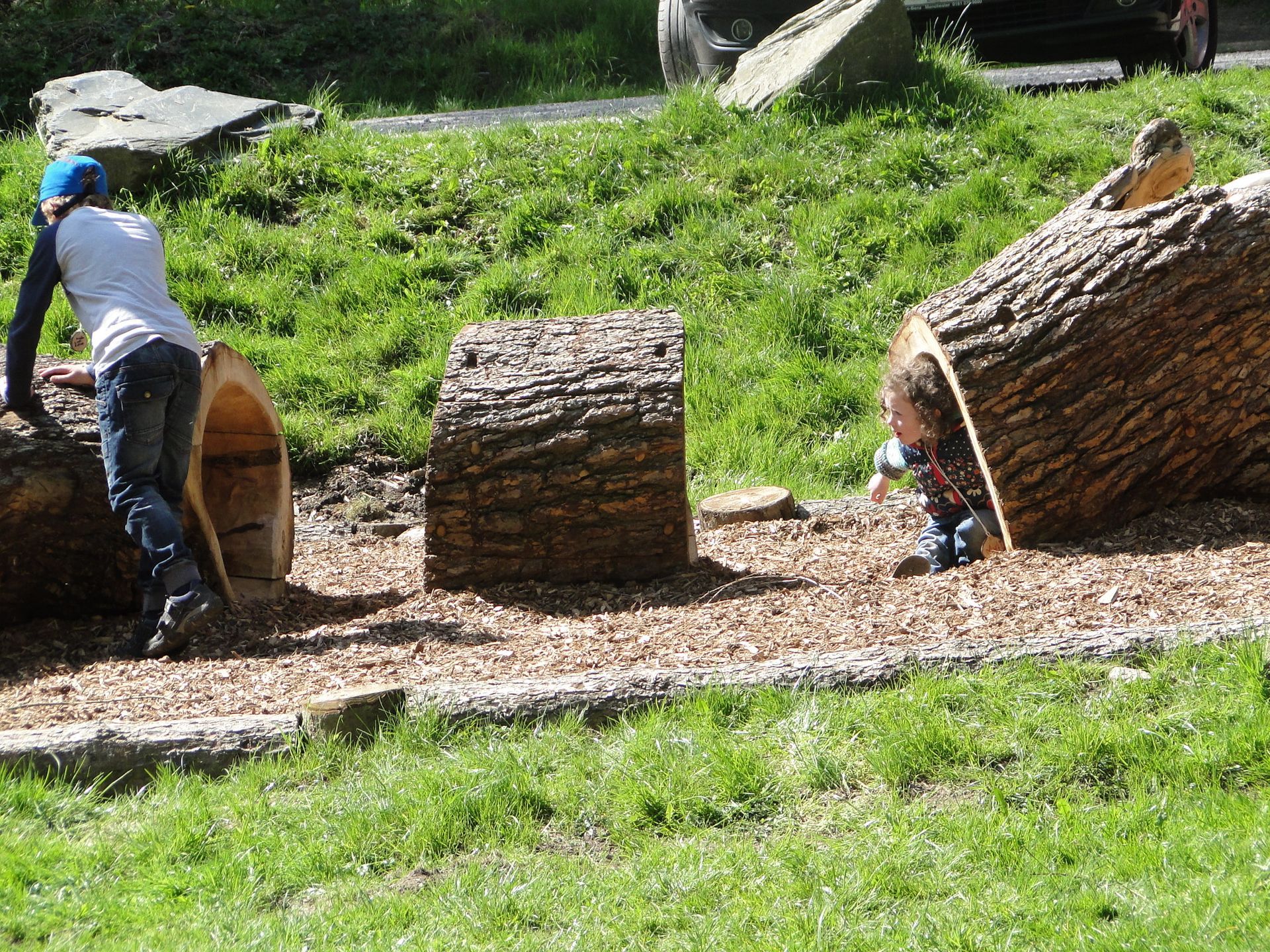
Loose materials such as sand and bark support more informal, exploratory play and integrate more naturally within planting-led environments, although they require ongoing maintenance and management. Modular systems can be effective in smaller or temporary installations but are less suited to high-use settings.
As with all surface types, suitability in relation to fall height and risk must be considered against standards such as BS EN 1177, ensuring that performance is maintained over time and not just at installation. Loose fill requires a 300mm depth to be maintained at all times, we therefore specify 400mm to allow for movement. This wider discussion, including common misconceptions around safety and performance, warrants more detailed exploration and forms the basis of a subsequent article.
Conclusion
Within this broader palette of surface materials, natural grass should remain the foundation of play landscapes wherever conditions allow. It delivers environmental, developmental and experiential benefits that are fundamental to high-quality outdoor spaces.
Artificial grass has a role, but that role is specific. It should be used as an alternative to other high-wear or safety surfaces, not as a replacement for living landscapes. The objective is not to favour one material over another, but to apply each appropriately. When guided by design intent, performance requirements and environmental responsibility, both can contribute to well-functioning, balanced and meaningful play environments.
Recent Posts