

Professor Nigel Dunnett passes away

By Adam White FLI PPLI

Share this article

Nigel Dunnett Changed the Way We See Planting Forever

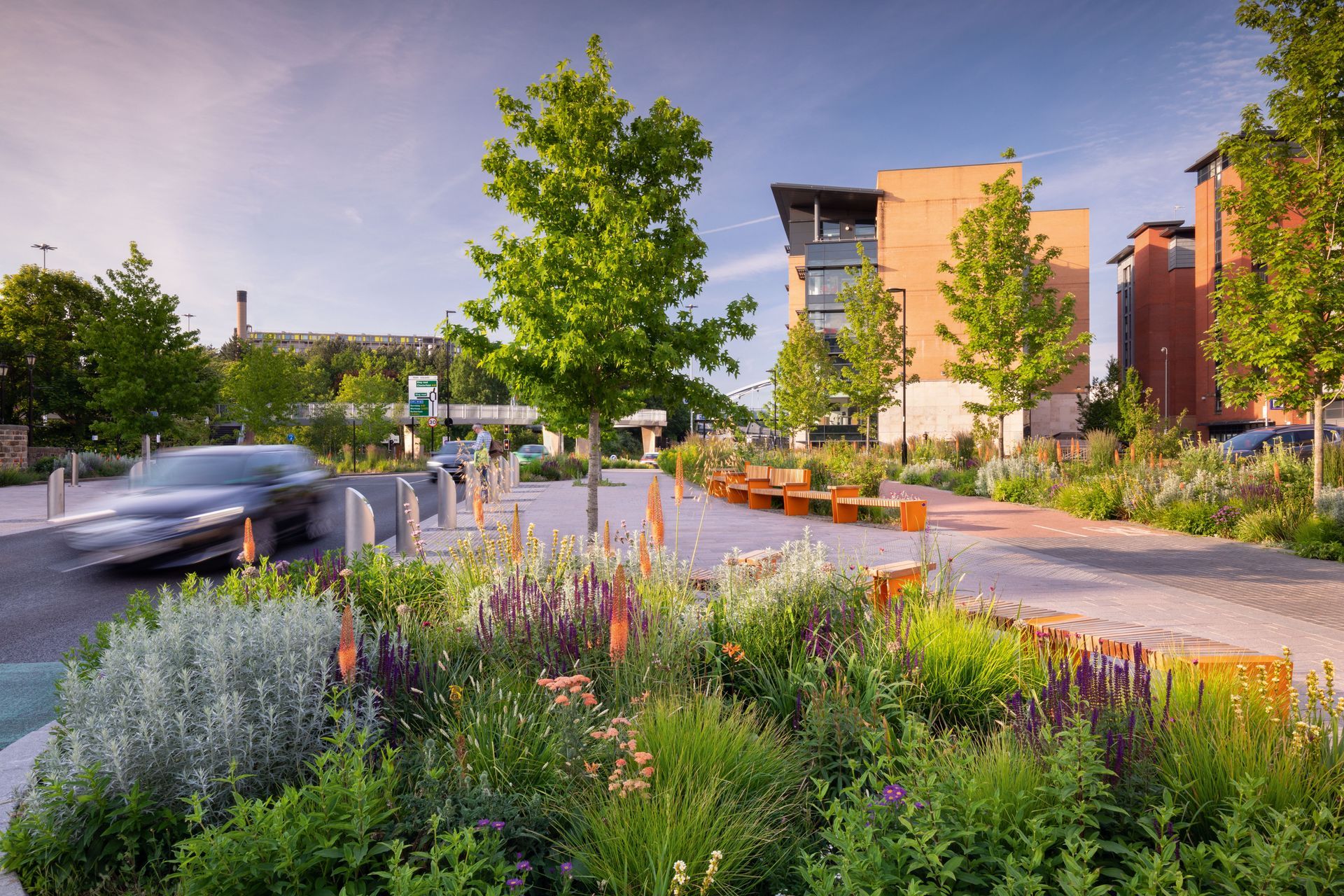
 The Grey to Green scheme in Sheffield is the UK’s largest retro-fit SuDS project, and also the UK’s largest inner city ‘Green Street’

I was deeply saddened to hear of the passing of Professor Nigel Dunnett when I got the phone call on Sunday morning.


I first met Nigel in 1999 when I was a guest speaker at the University of Sheffield. Even then, it was clear he was thinking differently. There was a depth to his work, a quiet confidence, and a way of connecting plants, people and place that stayed with me. As a Fellow of the Landscape Institute, Nigel was one of the most influential voices in planting design and urban horticulture of his generation. But for me, he was more than that. He was a colleague, a collaborator and a friend.

I had the privilege of working closely with Nigel during my time as President of the Landscape Institute. He gave his support generously and helped shape initiatives such as the Excellence in Horticulture Award and the #ChooseLandscape careers campaign.


I was also honoured to nominate him and see him made a Fellow of the Landscape Institute, a recognition that was richly deserved.


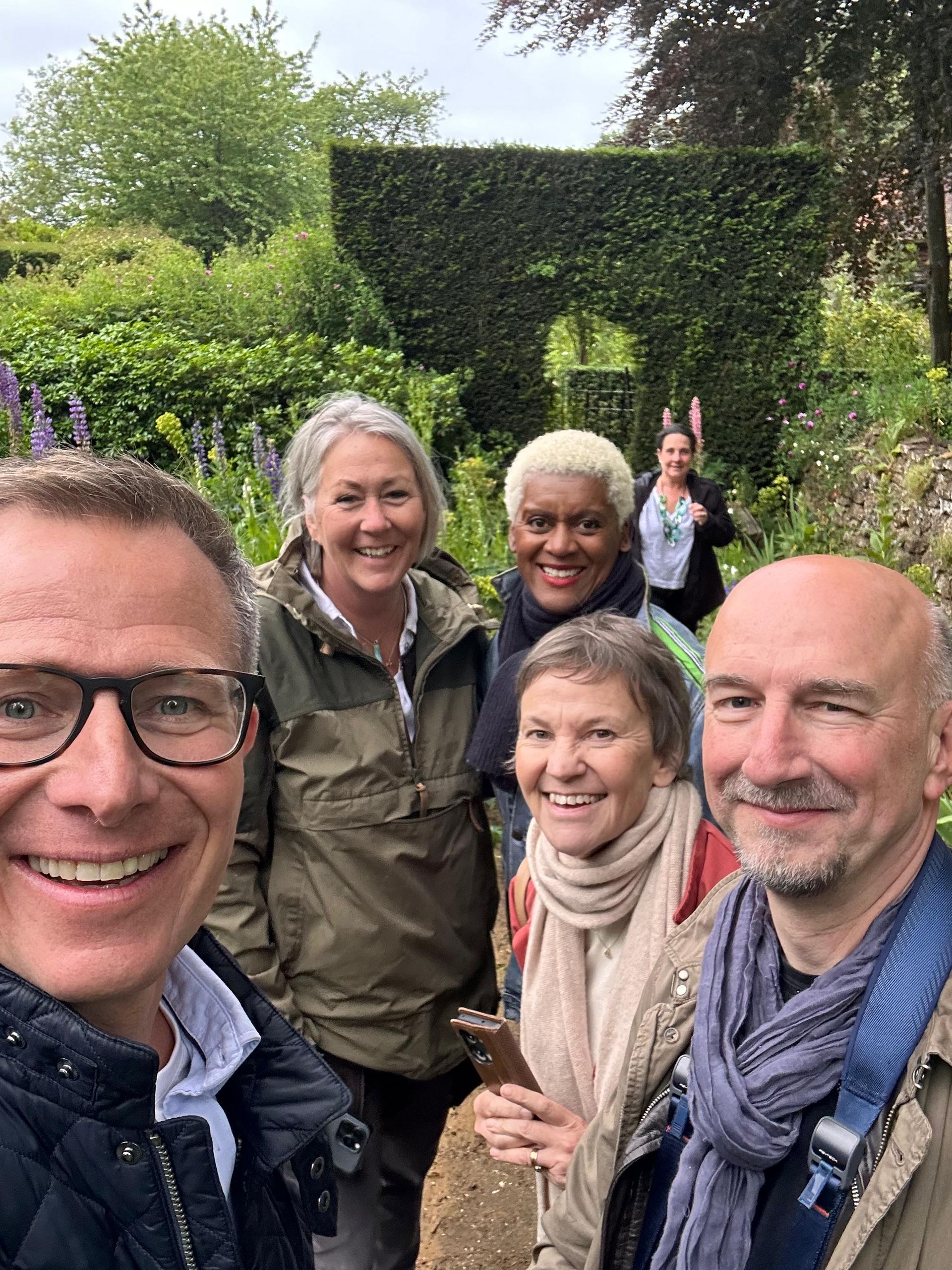
Trustees of the Sustainable Landscape Foundation, alongside Arit Anderson, Marian Boswall, Andrée Davies, Lisa Anderson and Simon Heppner,

We later served together as founding Trustees of the Sustainable Landscape Foundation, alongside Arit Anderson, Marian Boswall, Andrée Davies, Lisa Anderson and Simon Heppner, and most recently collaborated on projects including a new garden at Wimpole House for the National Trust and the redesign of Grosvenor Square in London.


Nigel led by example. Through his work and teaching, he showed us that planting could be both beautiful and resilient, grounded in his principle of low input, high impact. It wasn’t just a phrase, it was a way of thinking that has influenced an entire generation of designers.


He was also a committed member of the College of Fellows, always generous with his time. He led tours, shared knowledge and encouraged others. His passion for plants, people and place came through in everything he did.


Fellow of the Landscape Institute is the highest form of Chartered membership awarded to its innovators, leaders and ambassadors. Here is the latest College of Fellows.

For over 30 years at the University of Sheffield, Nigel inspired students, practitioners and collaborators across the UK and internationally. What set him apart was the depth behind the work. His approach was rooted in decades of research, exploring how planting could be more dynamic, more resilient and more closely aligned with natural systems.


He helped shift the profession’s thinking. Away from planting as something decorative, towards something fundamental. Something that shapes how places perform, how they feel and how they endure.

The award of Fellowship of the Landscape Institute (FLI), recognises those who have made a special contribution to the development and promotion of the landscape profession. They include Adam White and Nigel Dunnett.
In this book, plant selection, planting plans and implementation techniques show how to develop an idea from first base and make gardens that thrive and evolve beautifully
The Dynamic Landscape book advances a fusion of scientific and ecological planning design philosophy that addresses the need for more sustainable designed landscapes.

His influence wasn’t just through projects, it was through what he shared. His books, particularly Naturalistic Planting Design and The Dynamic Landscape, have become foundational texts. They didn’t just describe a way of working, they helped shift the profession’s thinking, giving designers the confidence to create planting that is ecological, resilient and alive. That thinking became embedded in practice.


Through his writing, through his teaching and through projects that demonstrated what was possible. From the Barbican to Grey to Green. From the Olympic Park to the Tower of London Superbloom. And now Grosvenor Square. These projects showed that even the hardest urban environments could be transformed into places that are rich, biodiverse and alive.

Queen Elizabeth Olympic Park, London Planting were designed as temporary installations around the edge of development plots before new building happened.
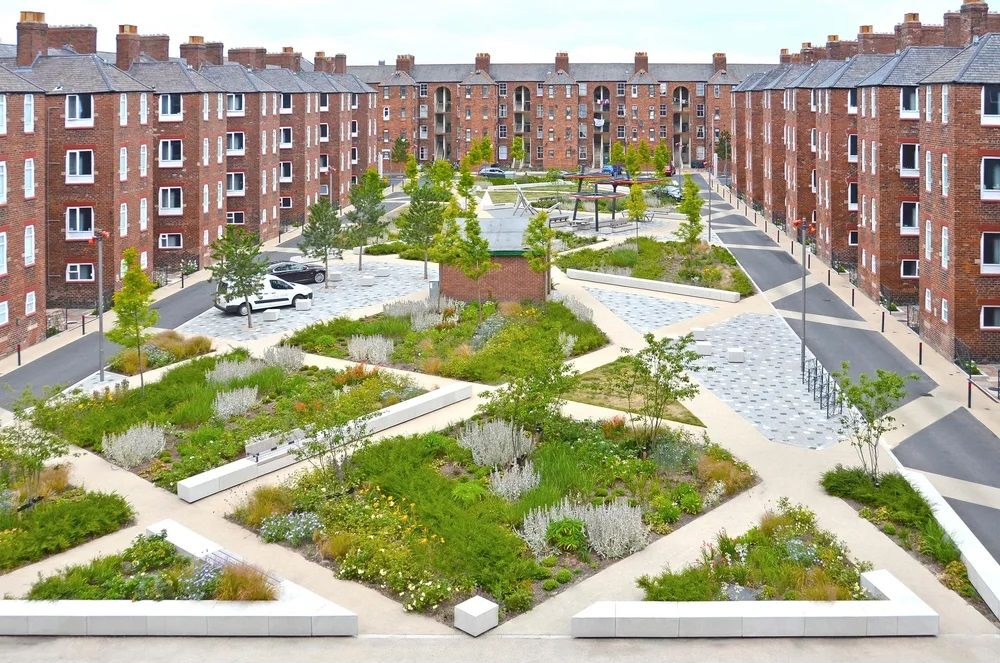
Conceptually, Beech Garden planting scheme consists of three main ‘Designed Plant Communities’ that are suited to different microclimates around the site, according to how much sun different areas receive, and the depth of the growing medium that was possible.

The Barbican, in particular, stands as a powerful example. A challenging, exposed podium landscape reimagined through planting that responds to microclimate, reduces water use and brings year-round texture and change.


It set a new precedent for how we adapt and retrofit post-war urban environments, not just for visual impact, but for wellbeing.


In 2015 Nigel designed the RHS Greening Grey Britain Garden at the RHS Chelsea Flower Show. As an RHS Ambassador, Nigel promoted the work of the RHS in the field of urban greening and representing the RHS Greening Grey Britain campaign at a national and international level. In this short film he talks to Chris Young about his career, passion for plants and why trees are so important in urban environments.

Nigel also had a particular love for the California superbloom and the way it could transform entire landscapes into vast fields of colour. He often spoke about places such as Death Valley and the Mojave Desert, where, after winter rains, the ground would come alive with goldfields, lupines and mariposa lilies. That sense of wonder, scale and seasonal change stayed with him and influenced so much of his work. I fondly recall Nigel telling me how excited he was when Sir David Attenborough invited him for coffee in his garden to talk about the important role planting plays in connecting people, place and nature, and how it would feature in his 2021 BBC series Green Planet.

A superbloom is a rare desert botanical phenomenon, mostly in California and Arizona, where an unusual large proportion of wildflowers whose seeds have lain dormant in desert soil germinate and blossom at roughly the same time.

On a personal level, we shared the same birthday, 23 January, and a lifelong love of Depeche Mode. We would often swap tracks and messages. Small moments, but the kind that stay with you.


Those with a keen eye may have noticed that many of Nigel’s Instagram Stories featured Depeche Mode as the soundtrack, most recently tracks from their album Memento Mori. The title, Latin for “remember you must die”, is something we discussed last year. As Nigel said, it isn’t meant to be morbid, but a reminder to embrace life and recognise how precious it is.

Nigel’s influence extended far beyond individual projects. He changed how planting is understood and valued, leaving a legacy that will continue to shape landscapes for generations to come. This is a significant loss. To the profession, yes, but above all to his wife Marta, sister Jude and his family, and to those of us who knew him personally. 


Nigel didn’t just design landscapes, he changed how we think about them. He raised expectations and showed what was possible. The best tribute we can offer is to continue that work, to keep pushing, to keep questioning, and to keep designing landscapes that are richer, more resilient and more alive. That is his legacy, and it’s one we carry forward.

Nigel Dunnett's Landmark Projects

The Barbican Estate, London (2015)
Redesign of the podium landscapes, including Beech Gardens and the High Walk, transforming a Brutalist icon into a climate-resilient, biodiverse environment.

The new design takes a radically different approach.  Phase 1 of the rewaterproofing project was installed in 2015 and comprises Beech Gardens and associated High Walk areas.

Grey to Green, Sheffield (2016–2020)
The UK’s longest green street, replacing dual carriageways with biodiverse planting, bioswales and rain gardens to reduce flood risk and improve urban ecology.

The Grey to Green scheme in Sheffield is the UK’s largest retro-fit SuDS project, and also the UK’s largest inner city ‘Green Street’.

Queen Elizabeth Olympic Park, London (2012)
Principal planting consultant for the Olympic “Gold Meadows”, delivering large-scale, seasonal planting with lasting ecological value.

Olympic Park planting originally intended to be in place for just a few years, a few examples still remain, and, in addition to the originally introduced species, have also been colonised by typical urban plants, leading to an exciting hybrid outcome.

Tower of London Superbloom (2022)
Transformation of the historic moat into an immersive wildflower landscape using millions of seeds.

The Tower of London Superbloom installation celebrated the Platinum Jubilee of Her Majesty Queen Elizabeth II.

Grosvenor Square, London (completion 2026)
A major heritage park regeneration project, significantly increasing planting and biodiversity in the heart of the city.

Tonkin-Liu was appointed to lead a design team to deliver proposals for the redesign of Grosvenor Square, to RIBA Stage 2. Davies White were in this team as play experts.

Recent Posts

Why developers work with Davies White
By By Adam White FLI PPLI April 8, 2026
While natural play space design remains an important part of our portfolio, we are also landscape architects specialising in stakeholder engagement and landscape-led masterplanning.
Harrison Ford’s next big role? ‘Saving life on Earth, basically’.
By By Adam White FLI PPLI March 29, 2026
Harrison Ford’s next big role? ‘Saving life on Earth, basically’. A stalwart conservationist for decades, the Hollywood icon is using his legendary status to make world leaders actually pay attention.
Davies White & Community Playthings | Early Years Outdoor Learning Design for Schools and Nurseries
By Adam White March 29, 2026
Davies White Landscape Architects and Community Playthings are partnering to share best practice in designing inclusive, sustainable and biodiverse outdoor learning spaces for early years schools and nurseries. Request your free guide or book a Zoom session to discuss your project.
Two people sitting cross-legged on grass, in front of a pond and a building with a fountain.
By Davies White March 29, 2026
Andrée Davies and Adam White are both chartered landscape architects and first met at the environmental charity Groundwork before founding Davies White Ltd in 2005.
A person in a colorful dress runs along a grassy path between tall stalks of wild grass and white flowers.
March 23, 2026
The debate between natural and artificial grass in play environments is often oversimplified. This article is based on our 25 year’s experience designing children playgrounds.
By By Adam White FLI PPLI March 22, 2026
Did any of you see Arit Anderson’s BBC Gardeners’ World Feature at Chattowood in Essex? Featured on BBC Gardeners’ World and creating the backdrop to our Resilient Gardens Workshop (click and watch the short film below) the Chattowood development shows how a landscape-led, biodiverse design could shape the next generation of climate-resilient housing developments.
The Healing Power of Nature: The Princess of Wales
By Adam White January 11, 2026
The Healing Power of Nature: The Princess of Wales Marks Her Birthday with a Message of Recovery, Reflection and Renewal.
A first-hand account of the inaugural FutureScape USA, exploring international best practice, profes
By Adam White December 22, 2025
A first-hand account of the inaugural FutureScape USA, exploring international best practice, professional leadership and lessons from chairing the Pro Landscaper International Awards North & South America Heat.
By Adam White December 16, 2025
Planting, people and calm in one of Los Angeles’s most magical and secret community gardens: Adam returns to his favourite park after 17 years!
Landscape Leadership in a Climate Emergency – Chris Packham’s Message
By Adam White November 29, 2025
Chris Packham’s keynote and Sir David Attenborough’s message underline the urgency of the climate crisis and the vital role of landscape-led action and leadership.
Show More