
Reflections from Los Angeles: The Blue Ribbon Garden at Walt Disney Concert Hall
By Adam White FLI PPLI
Planting, people and calm in one of Los Angeles’s most magical and secret community gardens: Adam returns to his favourite park after 17 years!


Hello from sunny Los Angeles, I have been here supporting Pro Landscaper at their first FutureScape USA event and joining fellow judges for the Pro Landscaper International Design Awards. It was an inspiring and energising experience, and a strong foundation for future Pro Landscaper events in the United States.
While in California, I also made time to visit several parks and gardens, and today I’m sharing my thoughts on The Blue Ribbon Garden at the Walt Disney Concert Hall, a garden I last visited in 2008, and one that remains quietly remarkable more than two decades after its creation.
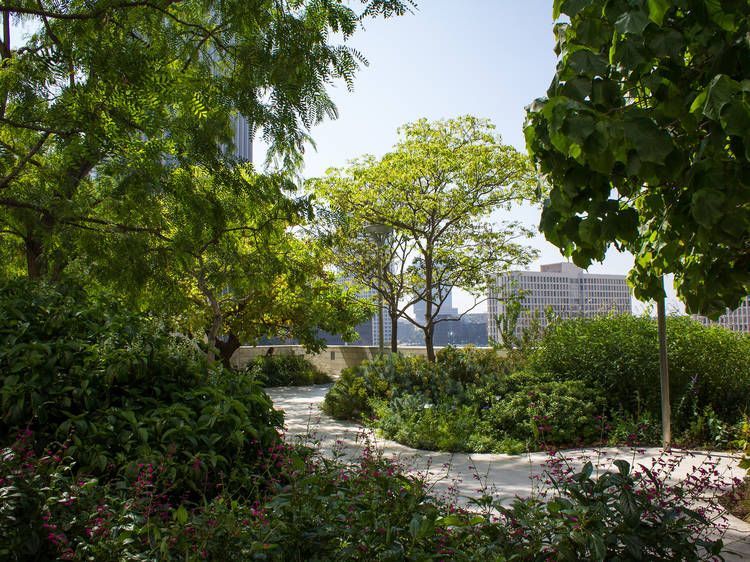
Set 34 feet above Hope Street, the garden offers elevated views across downtown Los Angeles. On clear days, visitors can glimpse landmarks including the Los Angeles Central Library, the Hollywood Sign and even the San Gabriel Mountains. Despite these expansive outlooks, the garden feels surprisingly intimate an impressive achievement given its rooftop setting and the dramatic architecture that surrounds it.
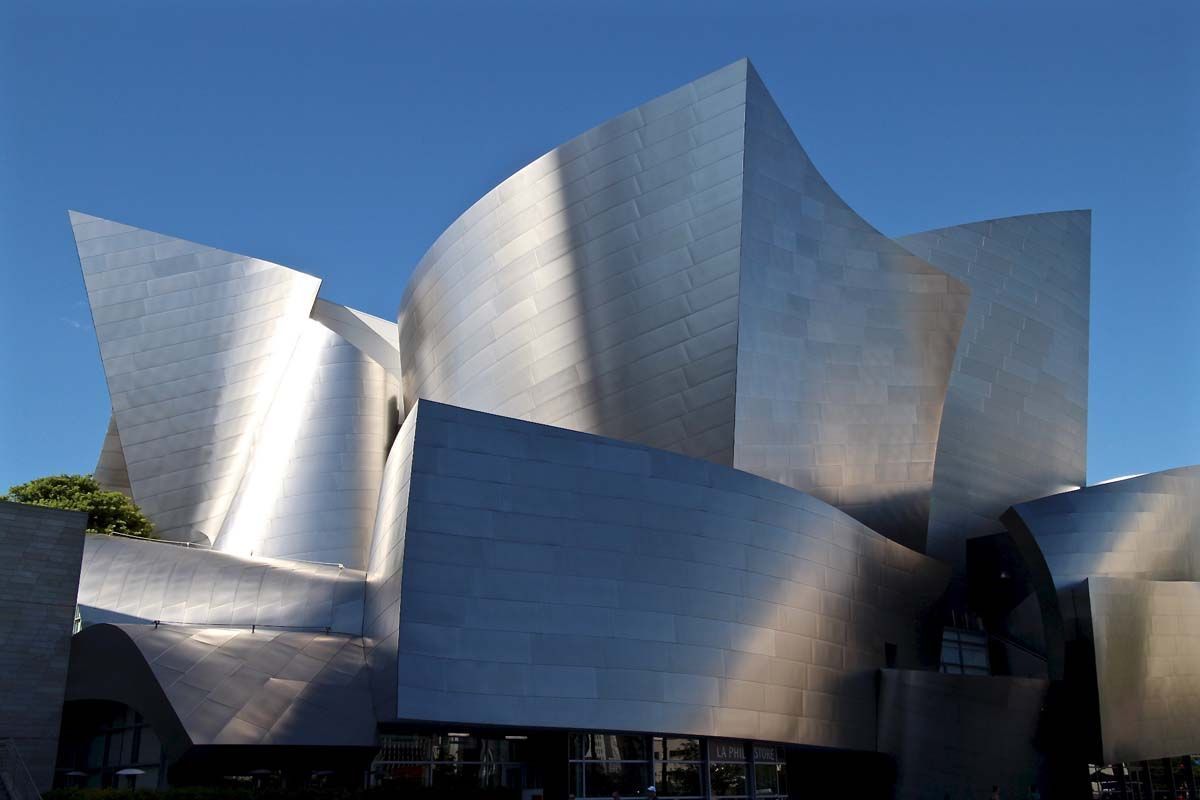
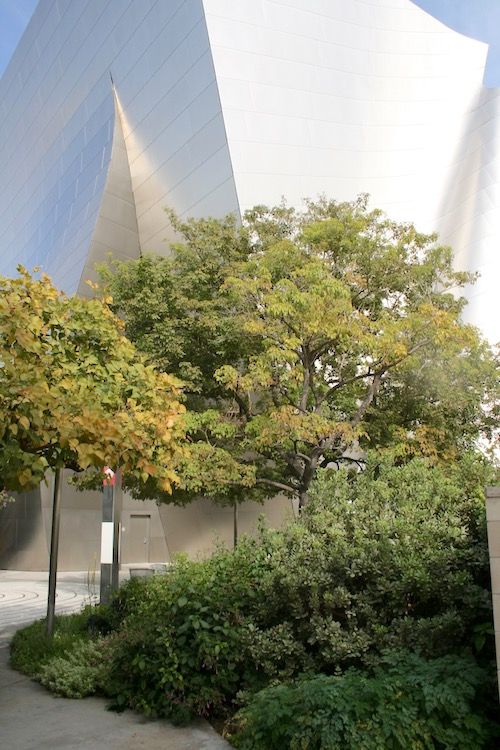
The Walt Disney Concert Hall, designed by the late Frank Gehry (February 1929 – December 2025), opened in 2003 as a sculptural, silver-clad landmark occupying an entire city block. The Blue Ribbon Garden followed in 2004, completing the vision for the building with a carefully designed planted public realm elevated above the street.
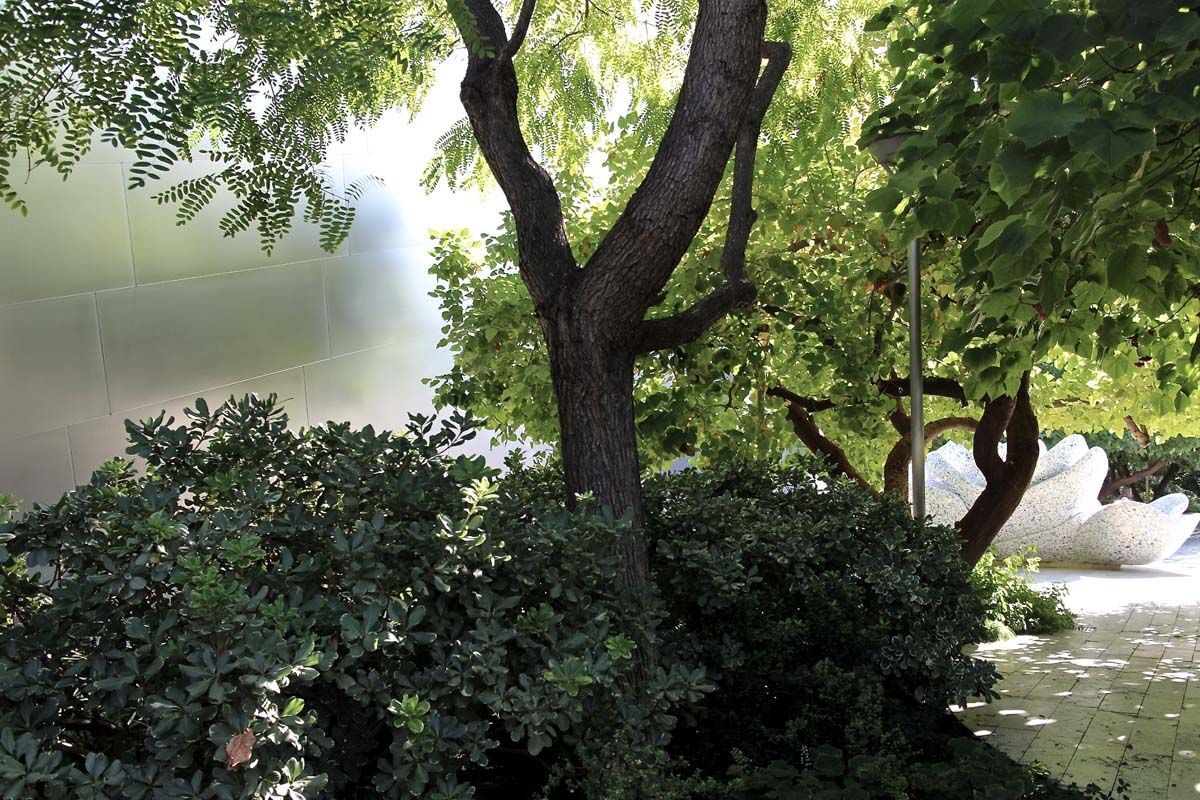
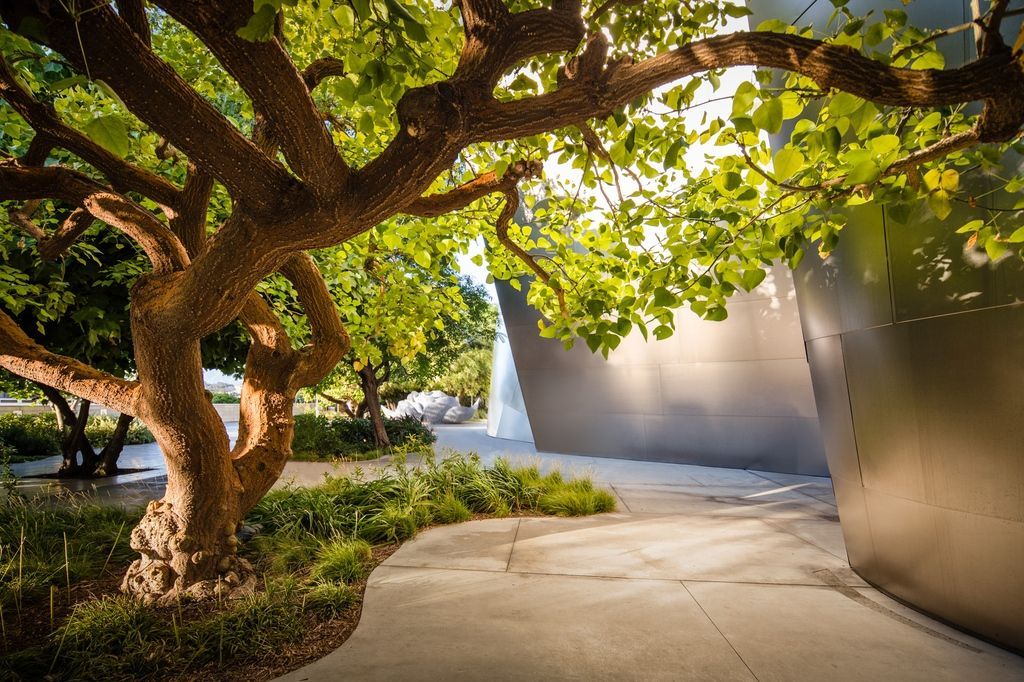
Wrapping the building on three sides, the garden provides a soft counterpoint to Gehry’s expressive steel façade. The building’s gleaming curves energise the urban setting, while simultaneously sheltering and cosseting a horticultural oasis spread across the 3.6-acre site.
The gardens were realised through a close collaboration between Melinda Taylor of Melinda Taylor Garden Design, who led the planting design and sensory character of the space, and Lawrence Reed of Moline, Ltd, who served as landscape architect, overseeing the broader landscape planning and its integration with the architecture.

Together, they created two distinct yet connected gardens:
- the Main Garden, running along the west side of the hall above Hope Street, and
- the more intimate Founders’ Garden, located at the corner of First and Hope Streets.
Both are carefully scaled to feel human, welcoming and restorative within a major civic setting, an intentional contrast to the monumental architecture they accompany.
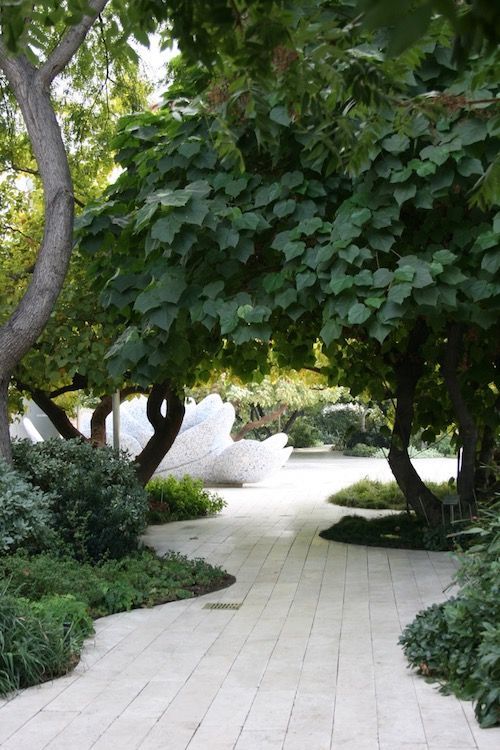
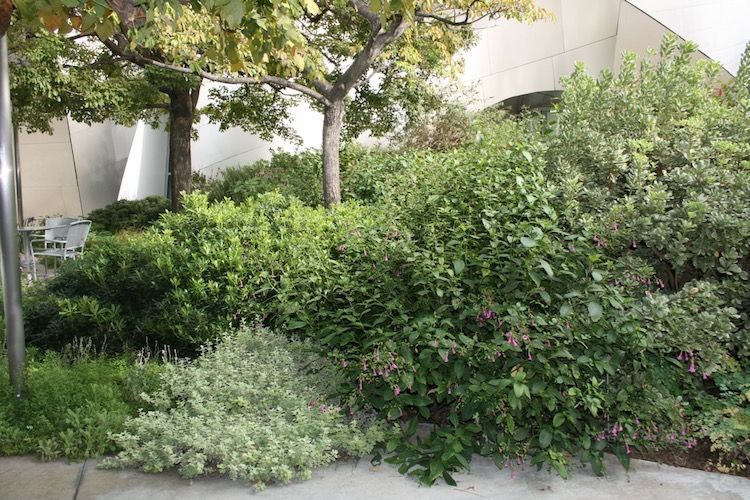
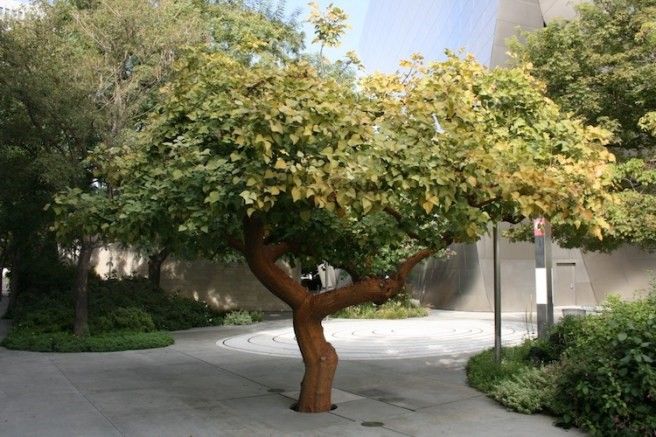
Entry to the Main Garden is via broad stairways, where the planting immediately establishes the garden’s tone. Beds of perennials and shrubs flow in organic contours, their forms echoing the curves of the building, while mature ornamental trees provide structure and rhythm. The planting palette is restrained, confident and deliberately repeated. This is not a collector’s garden, but a composed landscape built on clarity and consistency. The effect is calm without ever being dull.

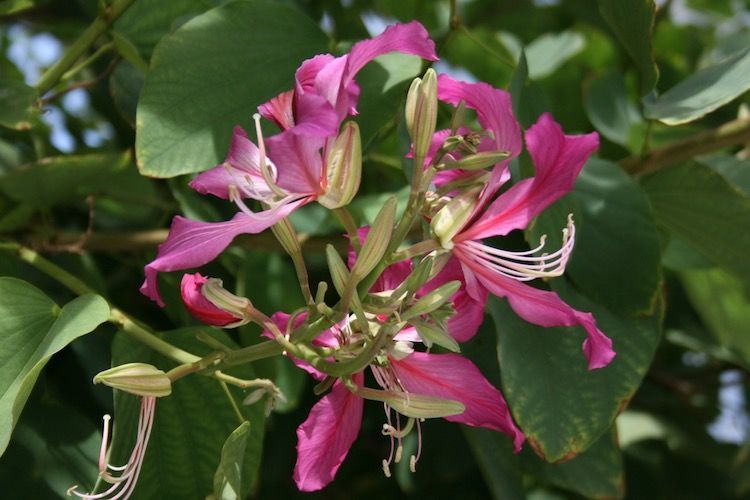
Visitors are greeted by sculptural Erythrina coralloides (naked coral tree), native to Mexico, its form dramatic even when leafless. Repeated throughout the garden is Bauhinia × blakeana, the Hong Kong orchid tree, while generous drifts of Strobilanthus cusia soften paths and provide seasonal depth.
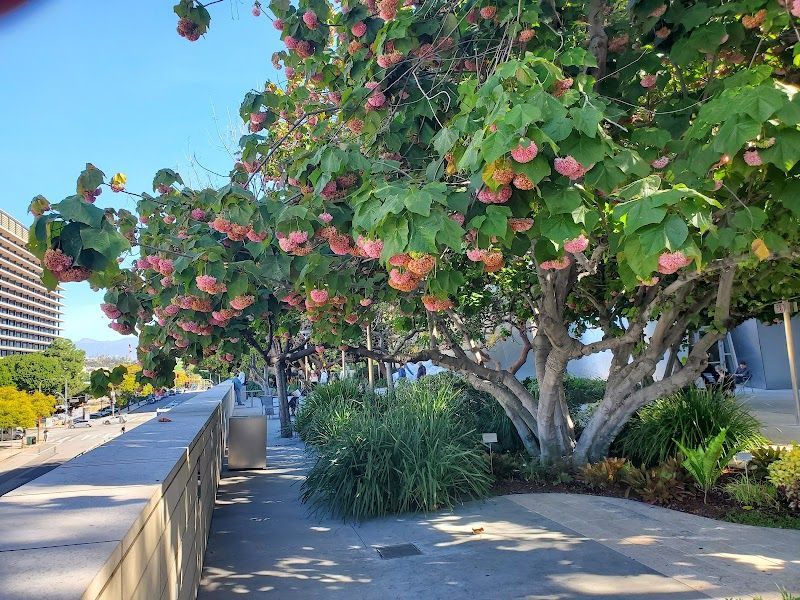
One of the quieter highlights is Dombeya wallichii, the pink ball tree from Madagascar. Its enormous, velvety leaves cloak the tree from crown to ground, hinting at the spectacular pink flower clusters that appear in autumn and winter. Although not yet in bloom during my visit, it’s a plant that clearly rewards return trips.
Planting with Touch, Scent and Memory
Taylor’s approach to planting is deeply tactile and sensory. She knits together plants that invite touch — from the downy leaves of Salvia officinalis ‘Berggarten’ and woolly variegated helichrysum, to aromatic herbs such as rosemary, Russian sage and scented pelargoniums.
Airy grasses and sedges support movement and lightness, while roses are pegged to scramble across walls facing the street. Montanoa grandiflora, the daisy tree, provides dappled shade and seasonal drama.
A sense of tradition rather than trend governs the palette. Taylor has spoken about favouring long-established nursery plants, often familiar from residential gardens, but used here in a civic context. She deliberately avoided predictable public-realm staples such as strelitzia and star jasmine, instead expanding the vocabulary of what a civic garden can be.
Milkweed and salvias reflect a personal interest in wildlife, supporting birds, bees and butterflies and reinforcing the garden’s ecological value.

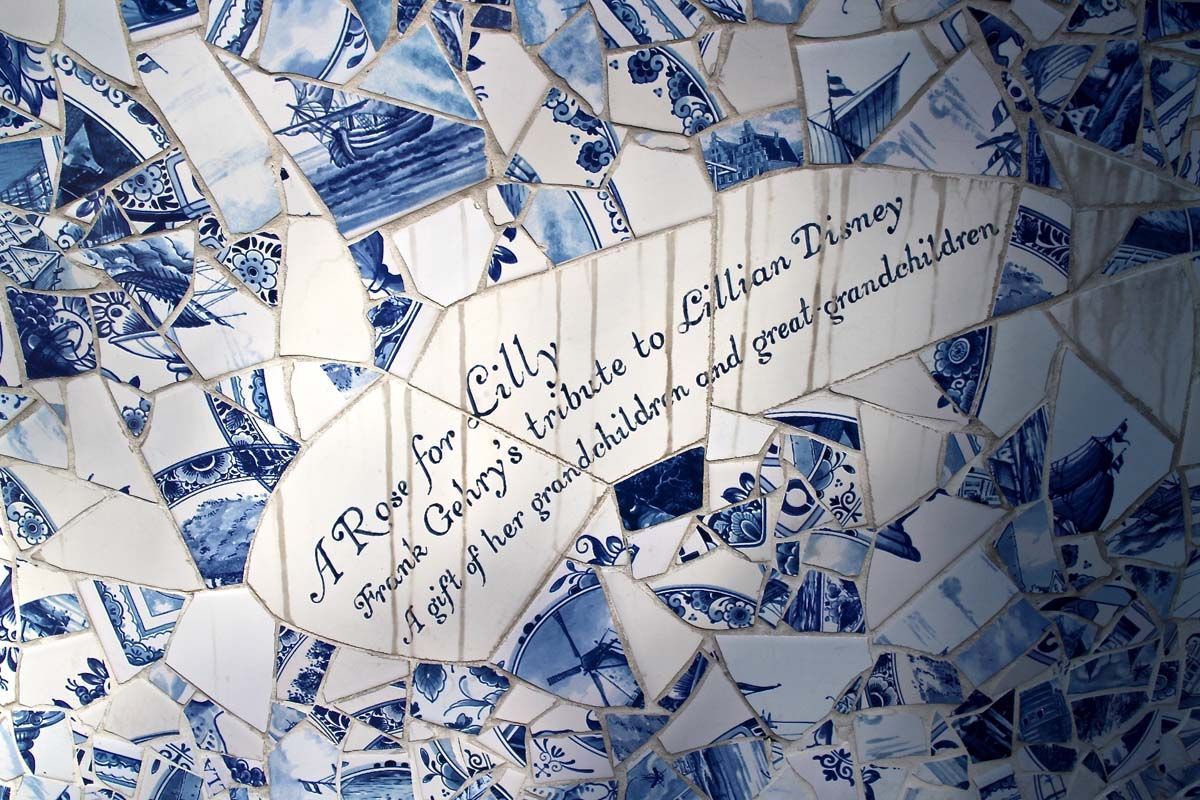
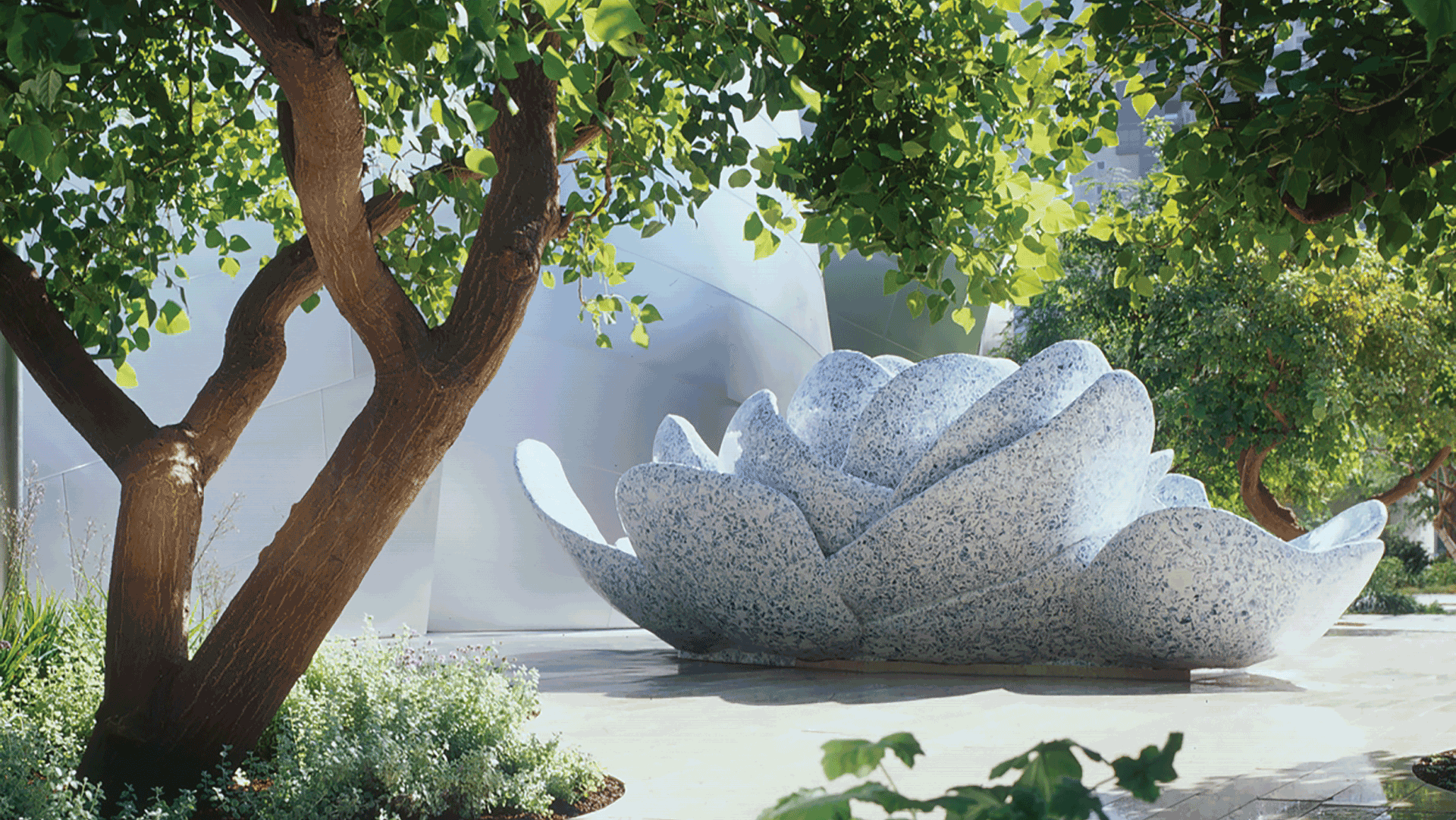
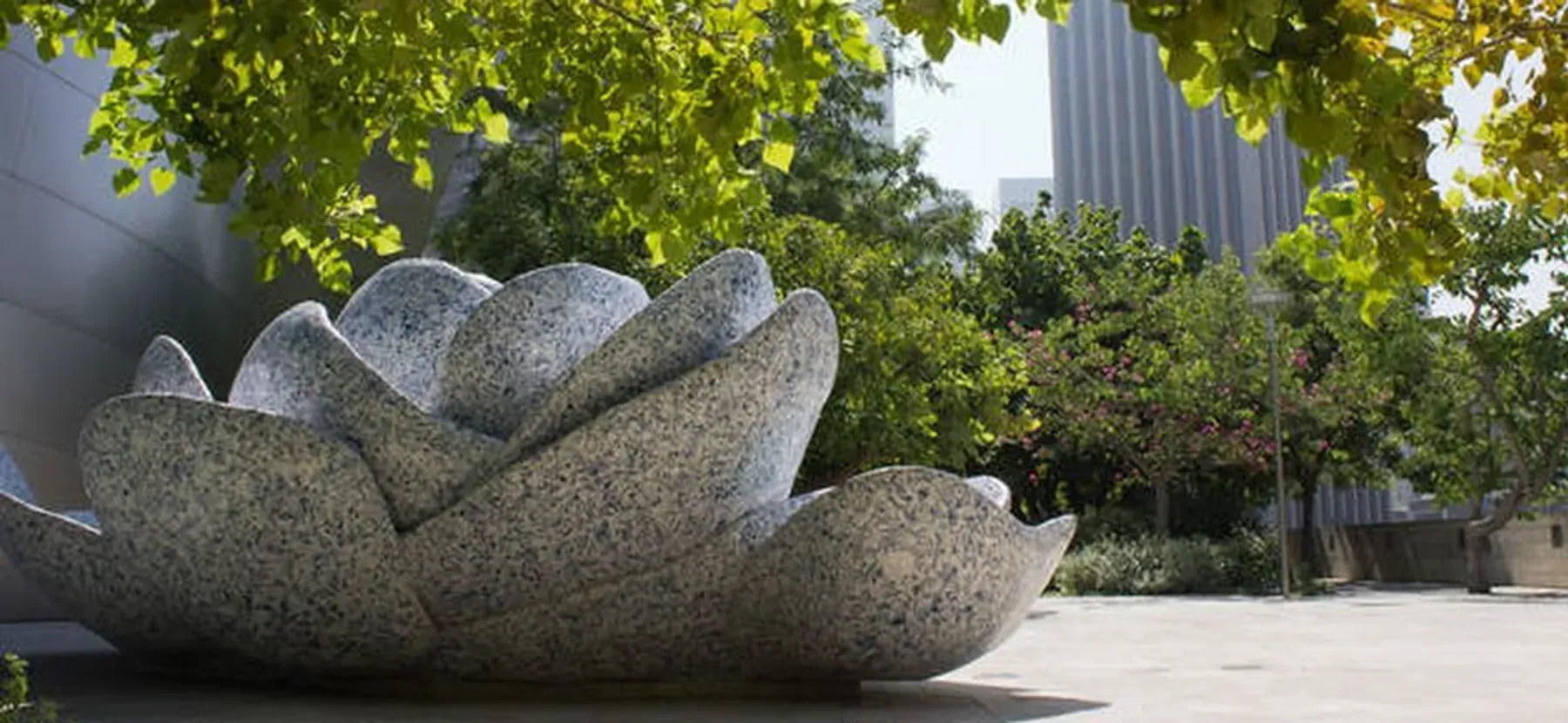
At the heart of the Main Garden sits the Lillian Disney Memorial Fountain, known as A Rose for Lillian. Designed by Gehry and clad in thousands of fragments of Royal Delft blue porcelain, the rose-shaped fountain is both artwork and memorial.
Its origins are deeply personal. During early discussions about the concert hall, Gehry noticed a cabinet of imitation Delft vases in Lillian Disney’s home. She explained that she and Walt Disney had a tradition of buying the replicas from airport souvenir shops during their travels, delighting in challenging friends to spot the fakes. That small story became the inspiration for the fountain, a human gesture set against one of Los Angeles’s most iconic buildings.
What struck me most on this visit was how the garden functions as an
urban refuge. Despite its central location, it attracts calm, low-key use: readers, lunch time folk, couples, photographers and solo visitors (like me) seeking a pause from the city.

The Blue Ribbon Garden shows what is possible when planting is treated as primary design infrastructure rather than just decoration.
Limited palettes, repeated forms, and plants chosen for structure, seasonality and longevity create a landscape that remains compelling year after year. It is a garden worth returning to for how confidently and calmly it holds its place alongside one of the world’s most expressive buildings.
What stays with me is not a single plant or feature, but the feeling of being comfortably held within the garden. The Blue Ribbon Garden never overwhelms. It invites you to slow down, sit, wander and return; proof that thoughtful planting and careful scale can leave a deeper impression than spectacle alone.


Recent Posts