
From Evidence to Impact: Why Aren’t Healthier Places Already the Default?

Adam White

Share this article

The Landscape Institute’s From Evidence to Impact: Delivering Healthy Urban Development conference opened with a deceptively simple question: how do we make healthier places the default rather than the exception? By the end of the day, the answer felt less like a missing piece of research and more like a challenge of translation, leadership and delivery.

The final Fishbowl, chaired by Rosie McEachan and Shahid Islam, brought everyone back together and raised some of the hardest questions of the day: long-term maintenance, political reversibility, women and girls’ safety, disability, neurodiversity, green gentrification and social prescribing.

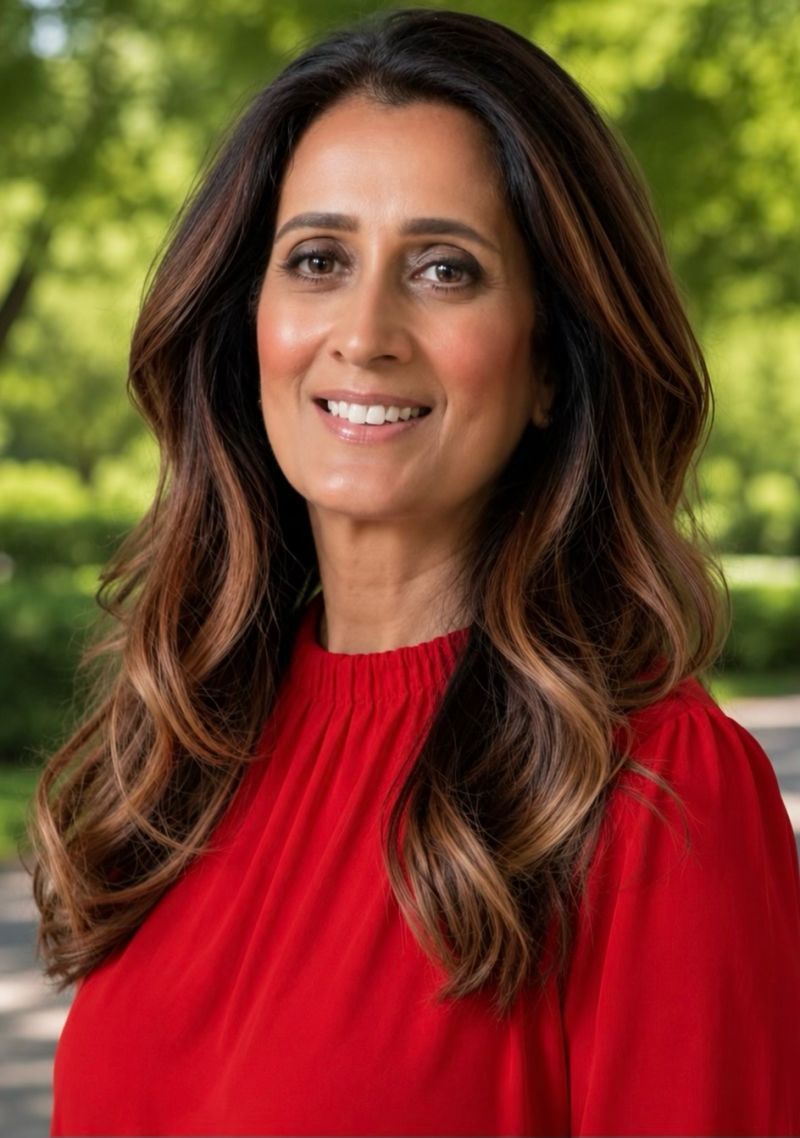
Landscape Institute President Dr Saira Ali FLI set an appropriately collaborative tone, arguing for landscape-led thinking, earlier involvement and a willingness to work across professional and funding silos. Professor Rosie McEachan, representing Born in Bradford and Healthy Urban Places, reinforced the purpose of the day: research has to connect with the practitioners and communities making decisions on the ground.


From public health, Professor Kevin Fenton CBE reminded us that health is shaped by far more than healthcare. Housing, transport, nature, employment, social connection and environmental quality all contribute, making healthy placemaking a responsibility shared well beyond the NHS. Chris Boardman CBE then made that argument intensely personal, recalling how his daughter asked to cycle to a park just 549 metres from home and he said no because he did not feel the route was safe. His question “What must be true? became one of my strongest takeaways from the day: start with the human outcome and work backwards to the conditions needed to make it possible.

Roisha Hughes CBE of The National Lottery Heritage Fund brought an important investment and capacity-building perspective, while Saira’s Bradford examples demonstrated the opportunity to treat transport, nature, regeneration, health and public realm as parts of one place rather than separate projects.


In the Creating healthier neighbourhoods session, chaired by Dr Rebecca Geary, the evidence became tangible. Professor Ruth Hunter shared 15 years of research around Belfast’s Connswater Community Greenway, asking not simply what was built but what changed afterwards: who used it, how behaviour shifted and what long-term value emerged. Pete Swift CMLI of Planit offered the deliberately provocative thought that “confidence beats evidence at Stage 0”, highlighting how often some of the biggest decisions are made before project-specific evidence can exist. Tom Walker CMLI of Gillespies introduced another ingredient that can easily disappear amid technical debate, joy, reminding us that healthy places still need to be somewhere people actively want to spend time.

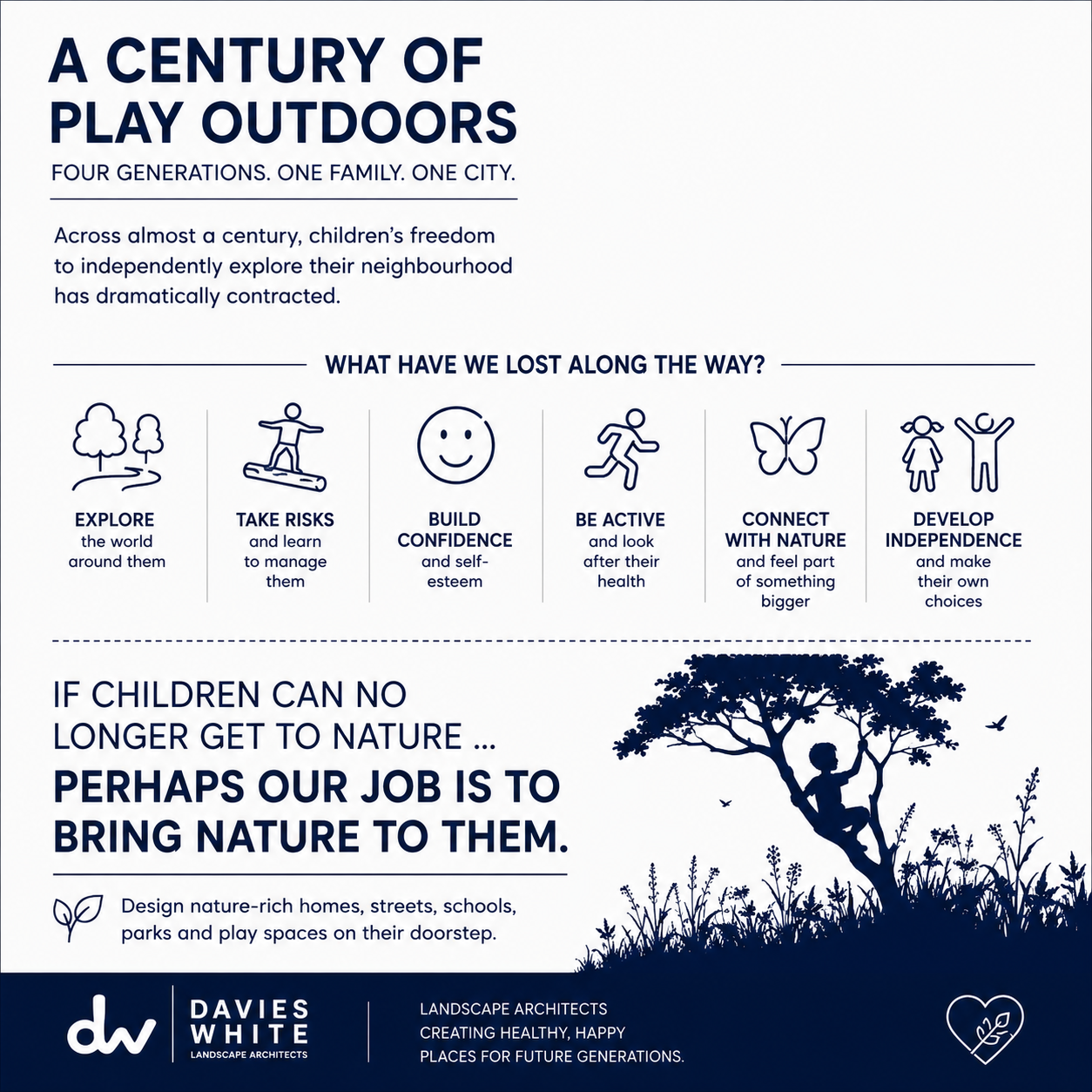
My own contribution for Davies White explored children’s shrinking freedom, nature-led play, meaningful engagement and our responsibility to bring nature closer to home. Boardman’s 549-metre story chimed strongly with the Sheffield comparison I shared, where the reported roaming range of an eight-year-old fell from around six miles in 1919 to approximately 300 yards in 2008. If children have fewer opportunities to travel out to nature, perhaps those of us designing neighbourhoods have a greater responsibility to bring nature to them.


One frustration of a really strong conference programme, of course, is that you cannot be in three rooms at once. As I was speaking in the Creating healthier neighbourhoods sessions, I missed two equally important parallel discussions.

Professor Sarah Rogers chaired Health and wellbeing through urban housing development, with Andrew Grant CMLI, Andy Wallis, James Scott and Adriana Marques, exploring how health and wellbeing can become a fundamental part of housing and city design rather than something considered after the major decisions have been made.


Meanwhile, Professor John Wright chaired Transport’s role in healthy urban landscapes, with Professor Jenna Panter, Sophie Thompson FLI and Duncan Paybody, looking at active travel, urban mobility and the role transport infrastructure can play in supporting healthier lives.


Judging by the conversations afterwards, I missed some excellent material. I would genuinely love to hear the key takeaways from delegates who attended those sessions, perhaps there are another couple of articles still to come.


And those conversations between the sessions mattered too. The coffee breaks, lunch and time throughout the day provided a wonderful opportunity to meet people working on very different parts of the same challenge. Some of my most useful conversations happened away from the lectern; comparing projects, joining up ideas and discovering where research, practice and future collaborations might connect.


The final Fishbowl, chaired by Rosie McEachan and Shahid Islam, brought everyone back together and raised some of the hardest questions of the day: long-term maintenance, political reversibility, women and girls’ safety, disability, neurodiversity, green gentrification and social prescribing without funding following the referral. Kevin Barton offered the memorable “Scunthorpe test”: can all of this work in ordinary places, not only exceptional projects?

I was sorry not to get a seat at the table, as I would have loved to share some of my experience working with Nature Sacred in the US. Their Sacred Places use a simple combination of nature, a bench and a small journal tucked beneath it, inviting people to pause, reflect and leave their own thoughts and stories. Over time, those entries become a powerful record of how people connect with nature, one another and the places around them; exactly the kind of lived experience that deserves a place alongside more formal evidence.


Rob Hughes, Chief Executive of the Landscape Institute, closed the day with a call to move beyond rhetoric and into action. That felt exactly right.


A huge thank you should also go to the Landscape Institute, Healthy Urban Places and Born in Bradford for bringing such a diverse group of people and disciplines together, and to the event sponsors Barcham Trees PLC, DeepRoot Green Infrastructure, eibe play Ltd, Proludic UK, Stoneworld and Vestre. Their support matters. Events like this — and the conversations, learning and connections they enable — simply could not happen without organisations willing to support them.


I left the day with pages of notes and far more ideas than could sensibly fit into one conference review. So, particularly for those who were unable to attend, over the coming days I’ll share a series of slightly more in-depth reflections on some of the speakers, projects and debates that stayed with me; not simply repeating what was said, but exploring what it might mean for the way we plan, design and deliver healthier places.


My overriding conclusion from the day? We do not primarily lack evidence. We need to become much better at translating it, embedding it early, protecting it through delivery and funding the stewardship that allows healthier places to keep working long after the ribbon has been cut.


Recent Posts

By Adam White August 17, 2026
A therapeutic garden is not defined by a particular planting palette, piece of equipment or design style. Its value lies in what the landscape enables people to experience: movement, choice, independence, connection, participation, comfort and moments of quiet.
By By Adam White August 17, 2026
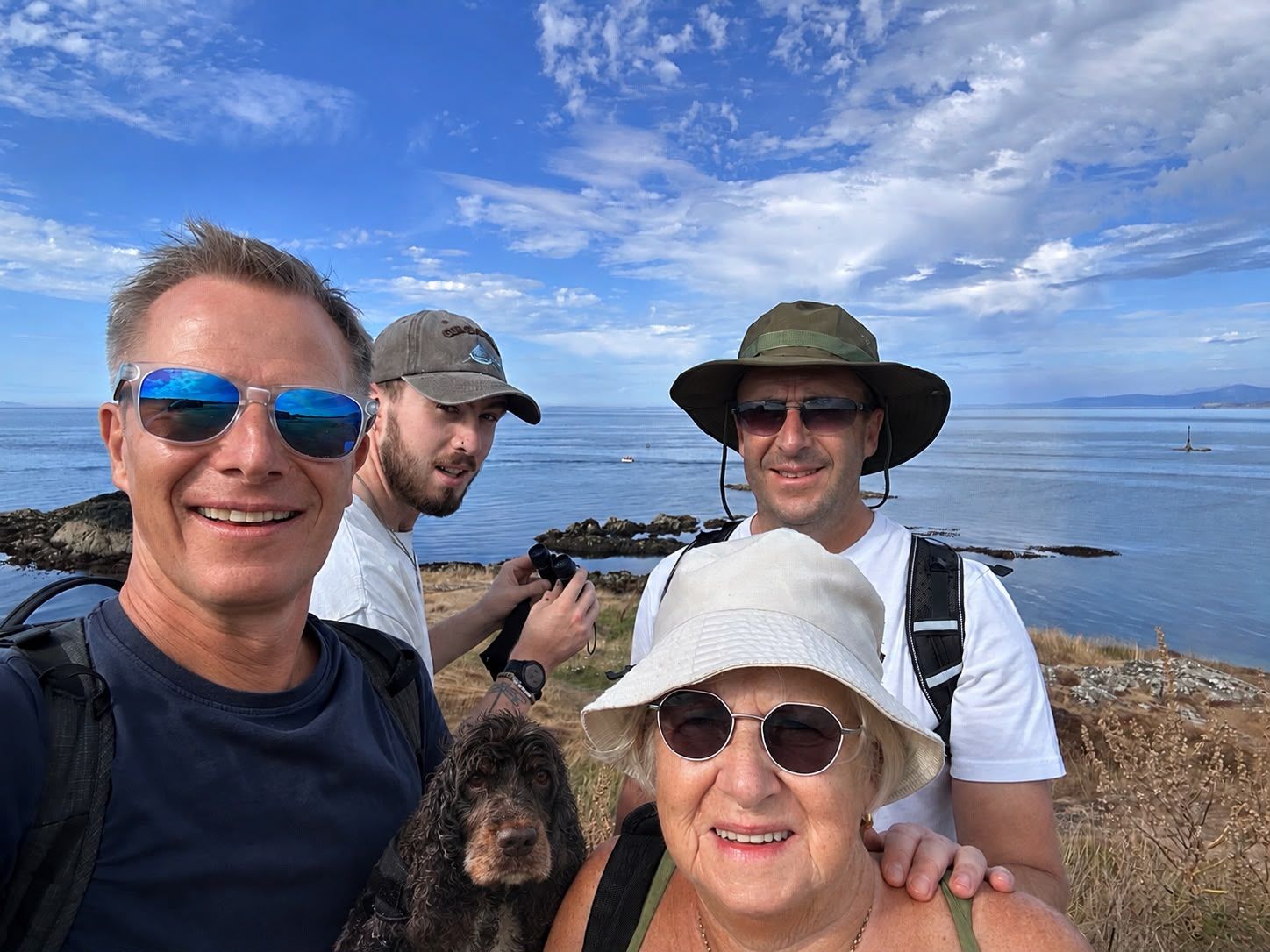
Family, nature and the simple joy of swimming in the sea with Watson … the moments that become the memories we carry with us.
By By Adam White July 23, 2026
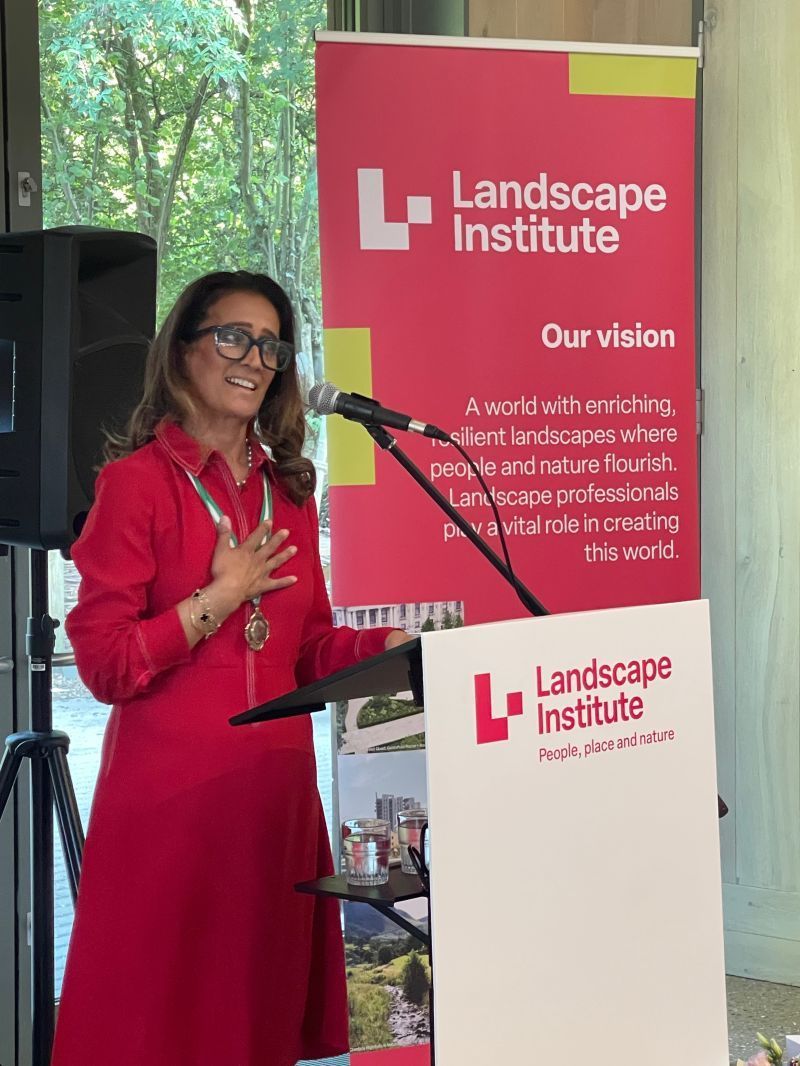
This week, I attended the Landscape Institute President’s Reception at Camley Street Natural Park, where Carolin Göhler FLI formally handed over the presidency to Dr Saira Ali FLI.
By Adam White July 14, 2026
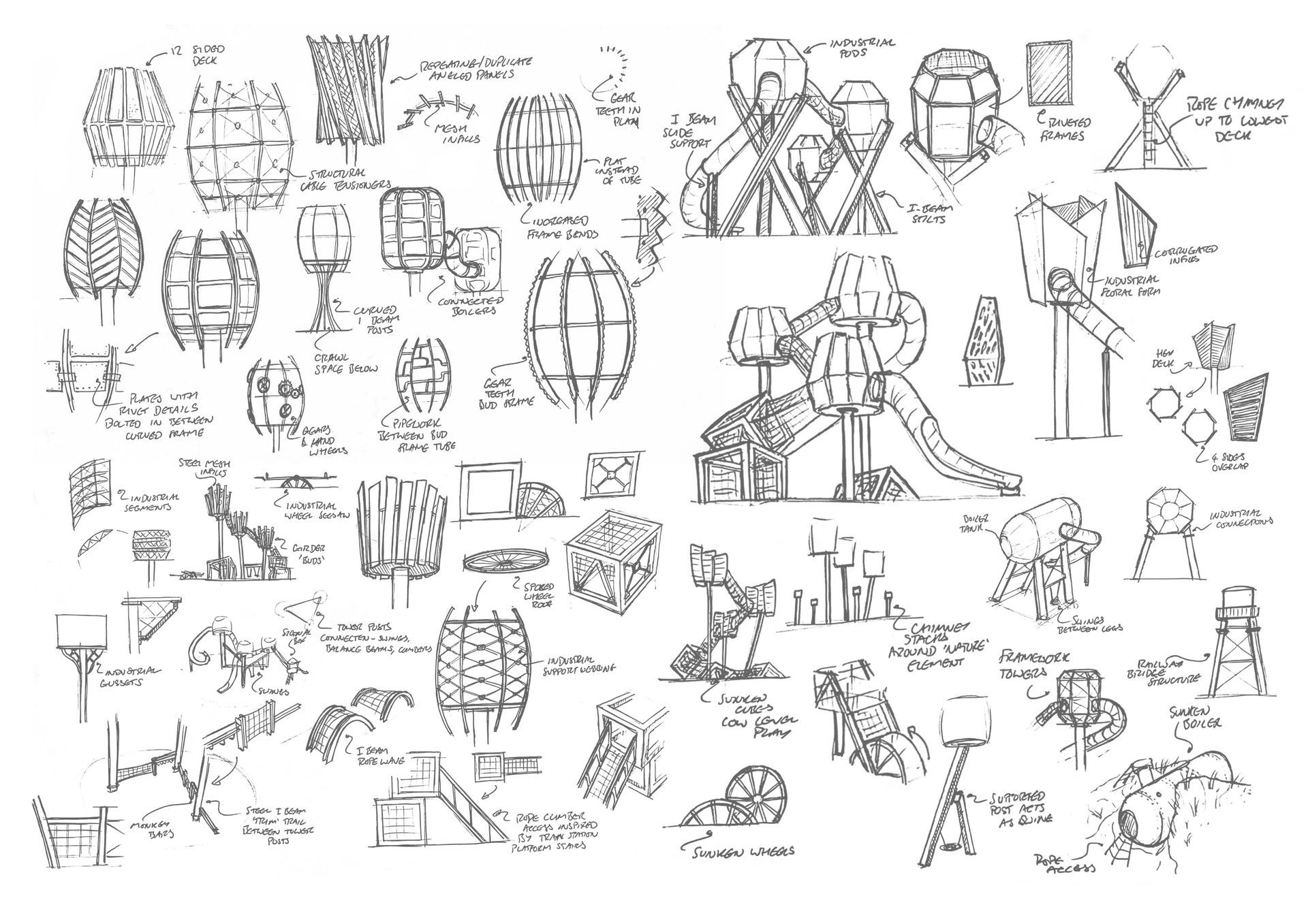
The best public spaces and places are created where creativity, craftsmanship and community come together.
Carol Klein's approach to climate-resilient and drought-tolerant gardens revolves around selecting
By By Adam White July 13, 2026
The future of planting design isn't about finding a handful of "climate-proof" plants. It's about creating resilient plant communities that work with nature, support biodiversity and continue to thrive as our climate changes.
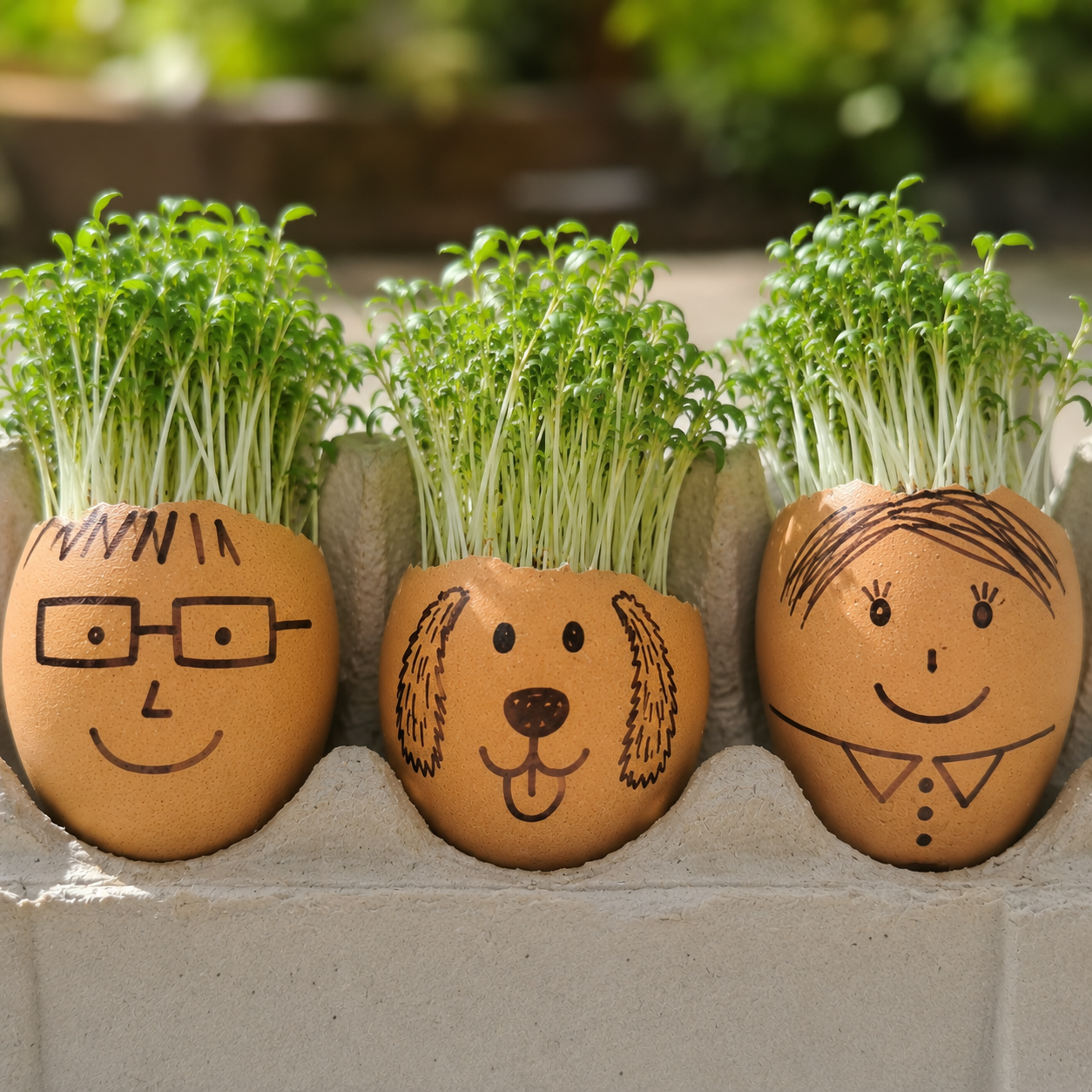
Every great growing space starts with a single seed.
Celebrate the launch of Growing Spaces!
By From Davies White July 3, 2026
To celebrate the publication of Growing Spaces we'd be delighted to send you a copy, together with a packet of Grow Happy cress seeds.
Green space, clean air and community lead the wish list for new homes.
By From the Landscape Institute June 30, 2026
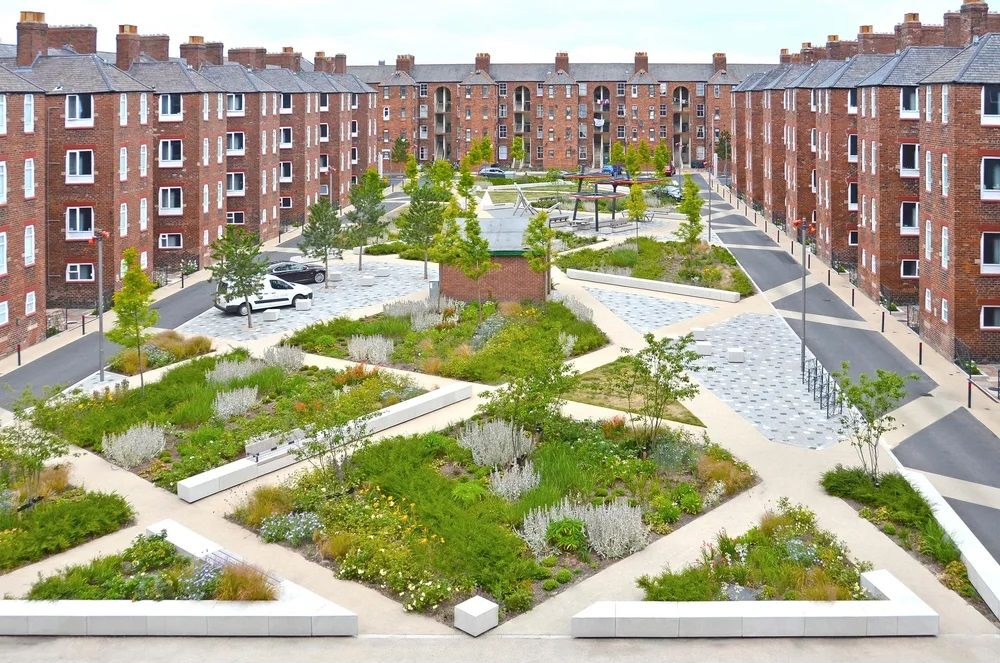
The landscape at Maritime Streets has changed perceptions – kick-starting the renewal of one of the country’s most deprived areas.
Tim Upson is to step down as Director of Gardens and Horticulture at the Royal Horticultural Society
By Adam White June 24, 2026
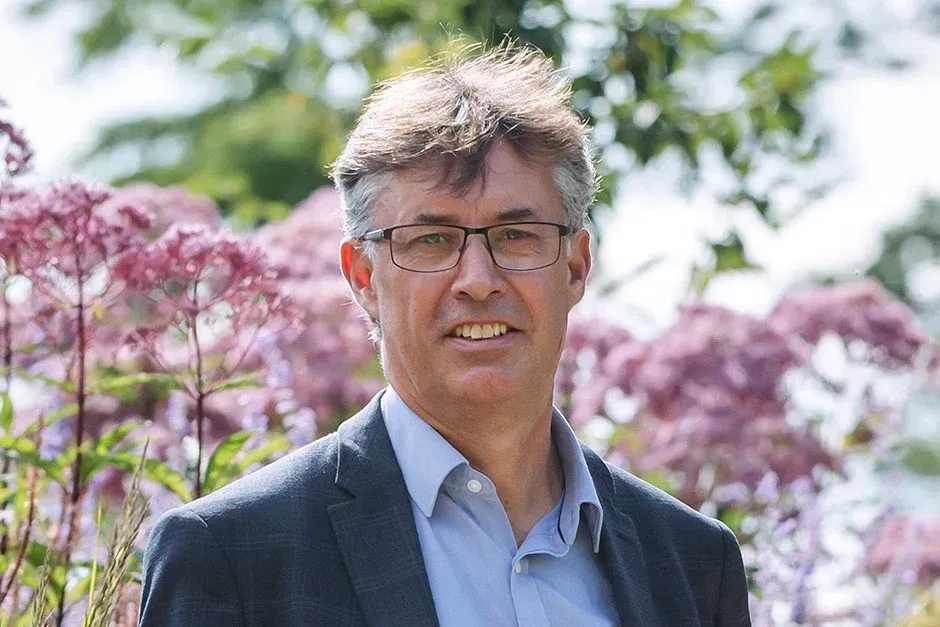
Tim Upson is to step down as Director of Gardens and Horticulture at the Royal Horticultural Society (RHS), ending a 12-year tenure as the charity’s longest-serving Director of Horticulture.
By Adam White June 22, 2026
Why This Matters As climate change, water scarcity, flooding, overheating and biodiversity loss reshape the way places are designed, landscape has become critical infrastructure. Gardens, green spaces, streetscapes, green corridors and country parks are no longer simply amenities. They help manage water, support biodiversity, improve health and wellbeing, create opportunities for play and strengthen community identity.  At the same time, homebuyers increasingly value access to nature, attractive green spaces, wildlife, shade and outdoor living. The Climate Resilient Communities Standard™ is being developed to help developers, planners and communities better understand, measure and demonstrate the value of high-quality gardens, landscapes and green infrastructure within new housing developments.
Sarah Eberle FLI FSGLD and Dr Juliet Sargeant FLI FSGLD both appointed MBE
By Adam White June 13, 2026
Sarah Eberle FLI FSGLD and Dr Juliet Sargeant FLI FSGLD both appointed Members of the Order of the British Empire (MBE) for services to horticulture.
Show More