
PROJECTS
A Davies White workshop to develop design principles for the Parkinson’s UK garden at RHS Chelsea Flower Show 2026
Parkinson's UK Garden Design Workshop
Translating lived experience into design principles
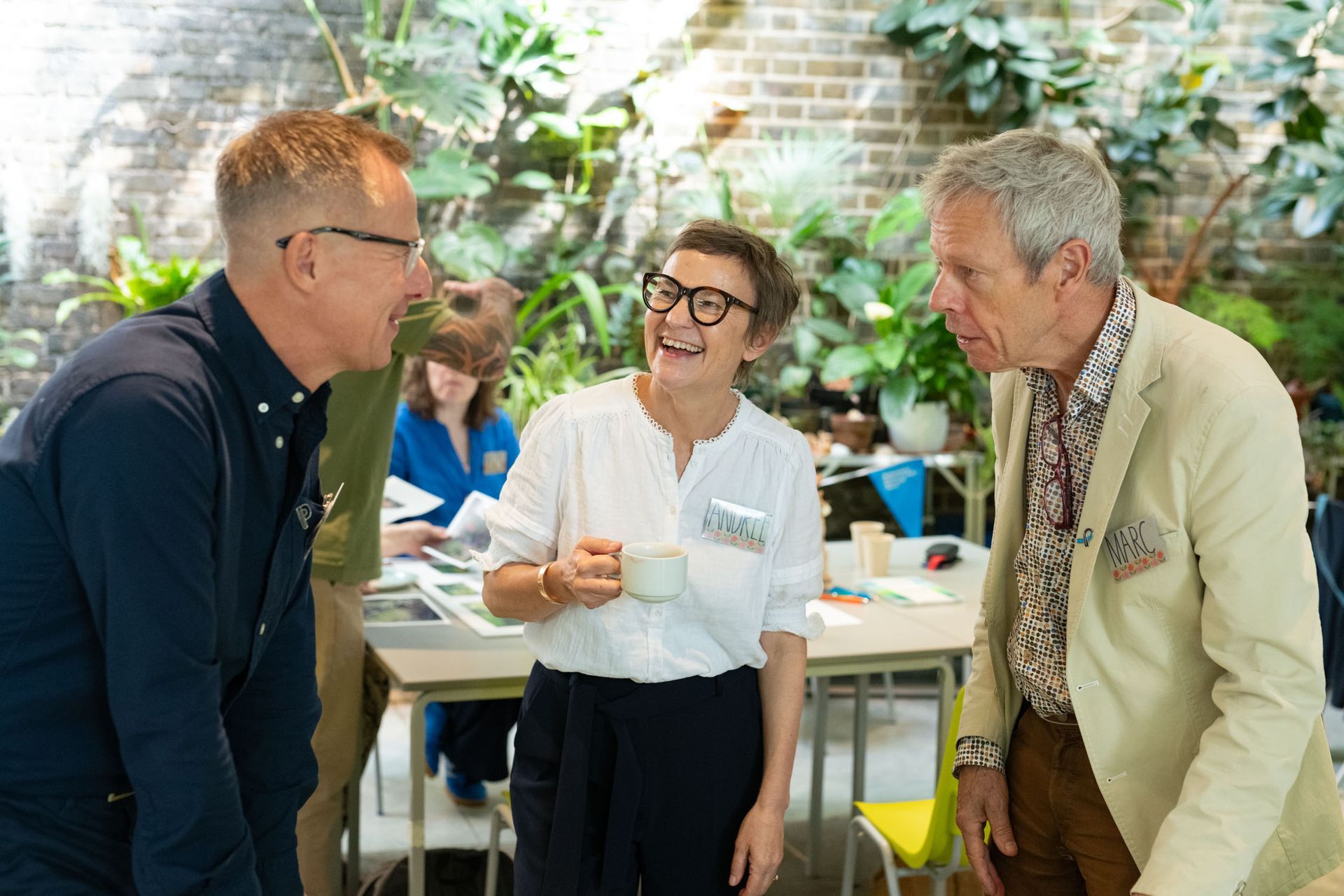
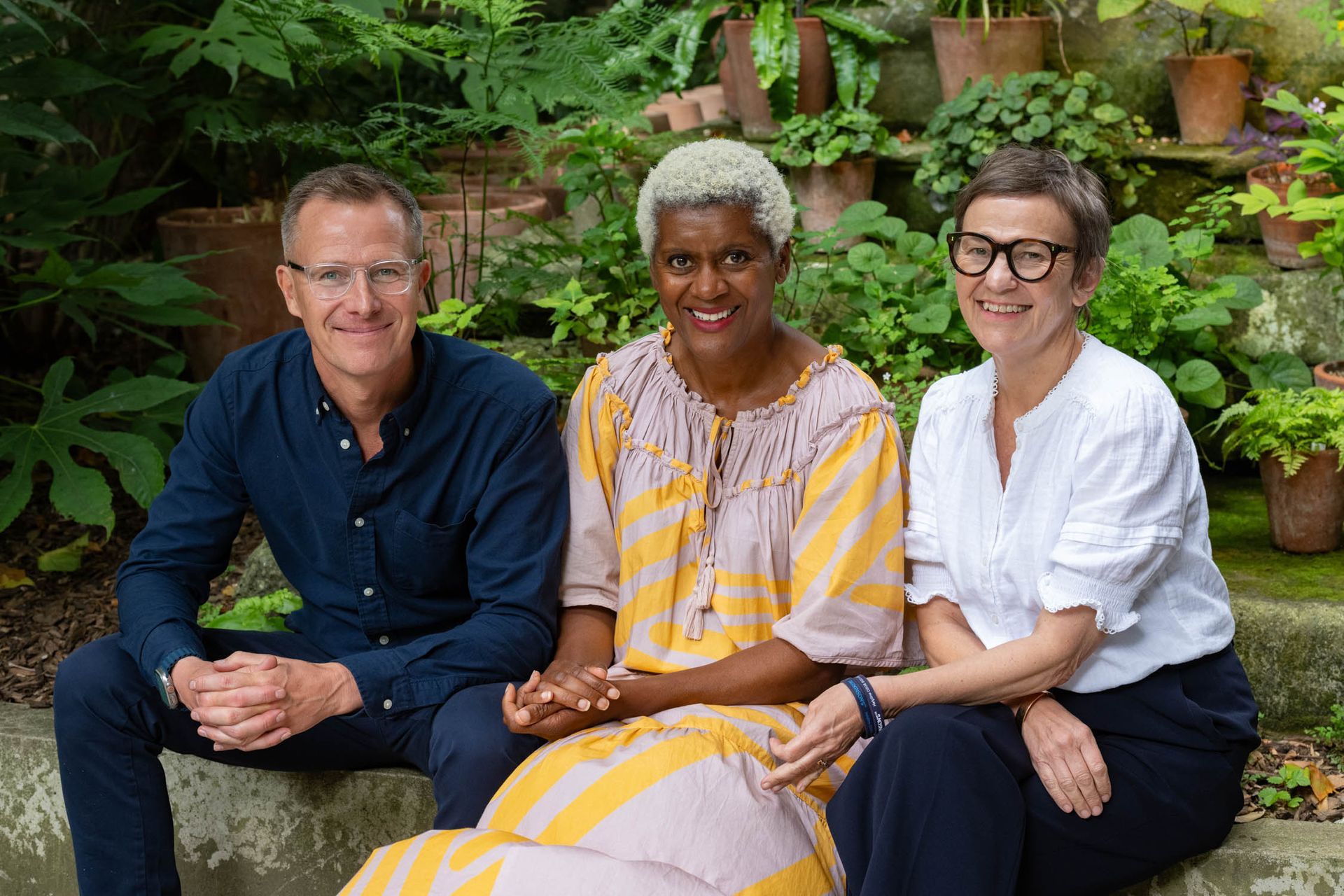
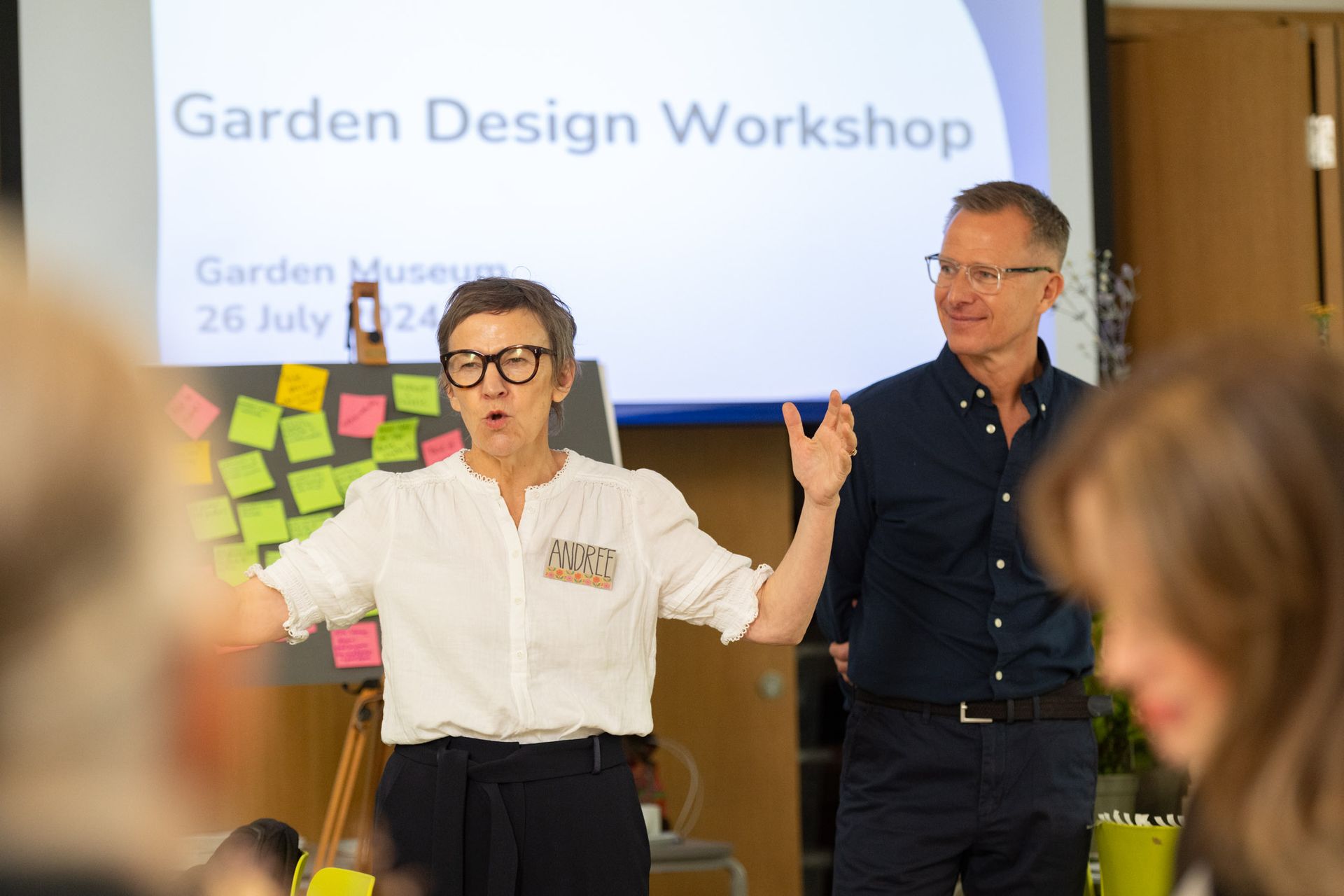
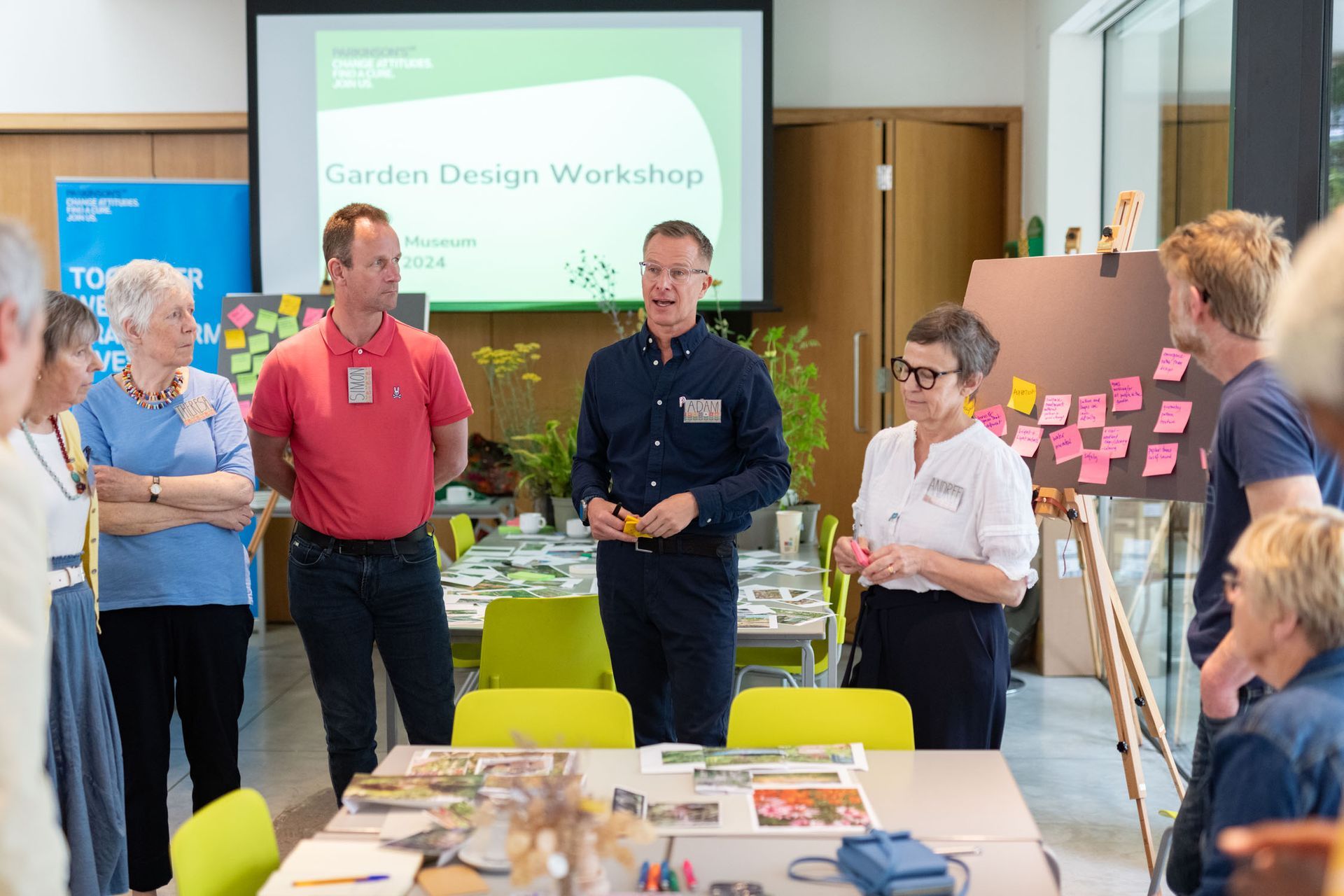
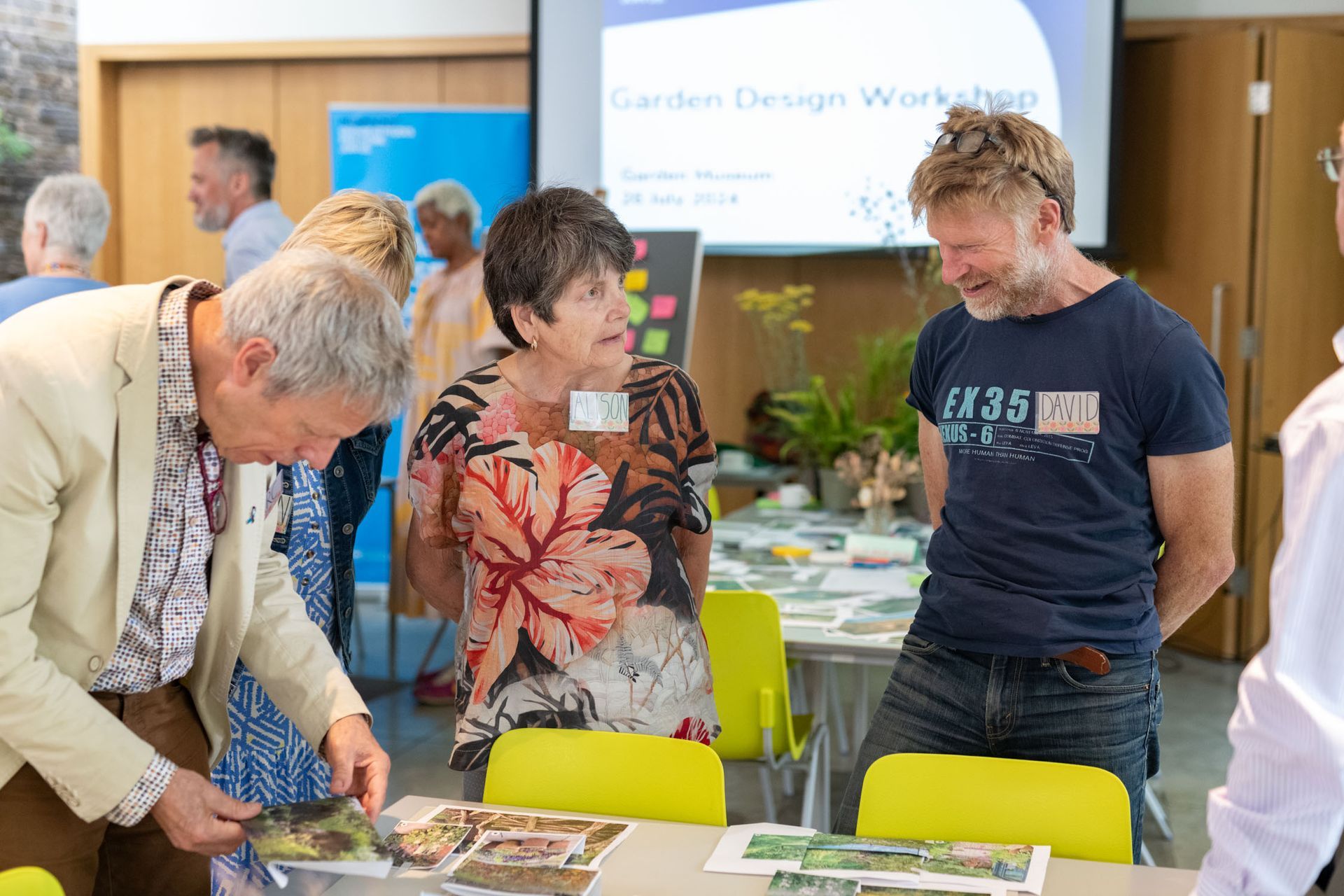
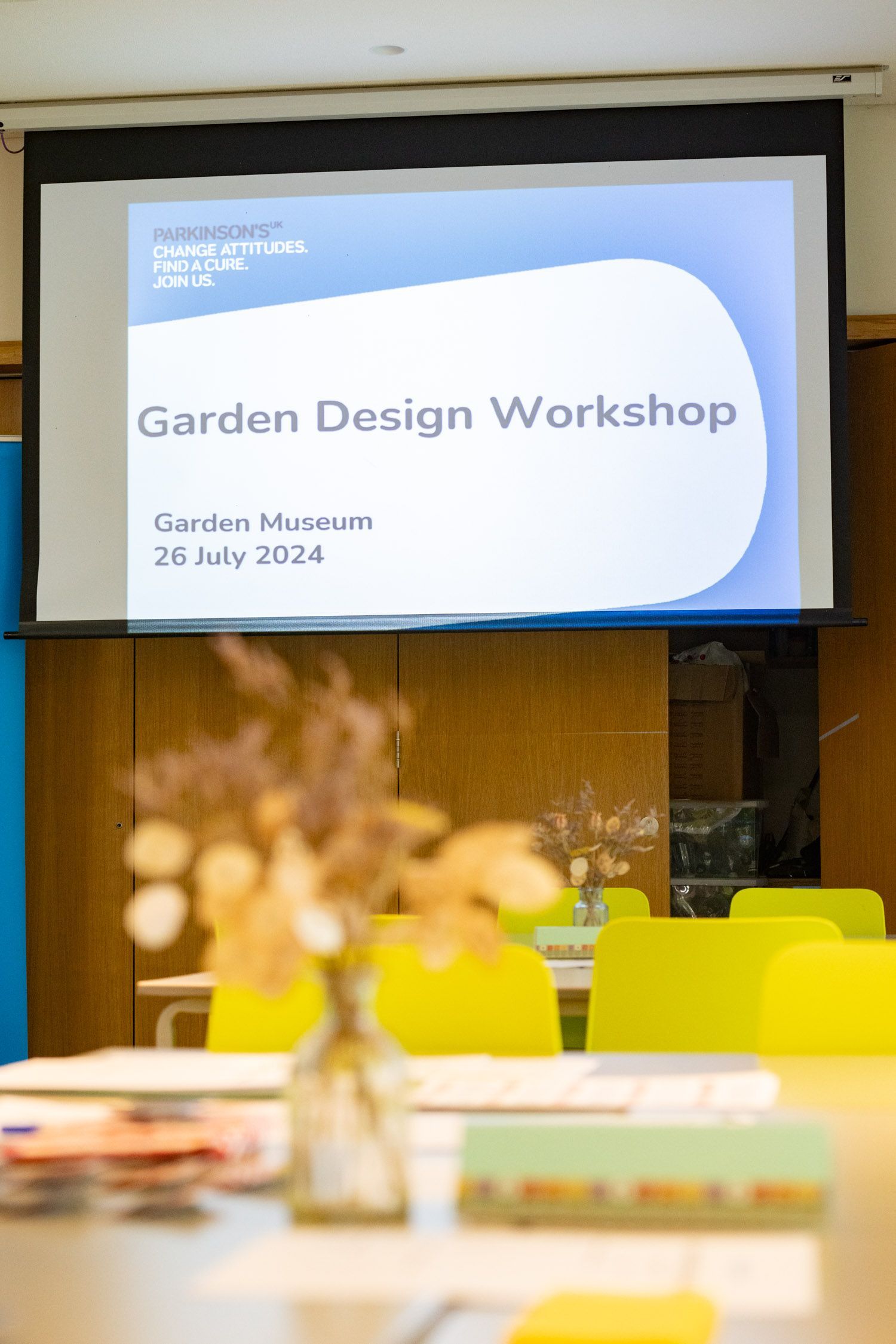
In July 2024, Davies White led a design engagement workshop at the Garden Museum in London, bringing together members of the Parkinson’s community, Parkinson’s UK and garden designer Arit Anderson. The purpose of the day was clear: to move beyond general consultation and develop meaningful insight that could directly inform the design of a garden designed by Arit Anderson for RHS Chelsea Flower Show and its long-term home at John Radcliffe Hospital in Oxford. Fifteen participants attended, each bringing their own experience of living with Parkinson’s or supporting someone who does. The workshop was carefully structured to create an environment where those experiences could be explored openly, and translated into a form that could guide design decisions.
Creating the Right Environment
The success of engagement begins with the setting. The Garden Museum provided a calm, informal and visually rich environment that allowed participants to feel at ease. The workshop was designed to be inclusive, supportive and flexible, recognising that Parkinson’s affects people in different ways, often changing throughout the day. Rather than a rigid format, the day was structured as a series of guided sessions, allowing participants to contribute at their own pace, in ways that felt comfortable and natural. This approach is critical when working with groups where confidence, energy levels and communication can vary.
From Insight to Principles
At the conclusion of the workshop, these themes were consolidated into a set of design principles. These included:
- the need for gardens to feel like a place of refuge and safety
- the importance of supporting both social connection and time alone
- designing for all senses, beyond scent
- creating spaces that can be used throughout the day and into the night
- ensuring accessibility through clear, continuous movement
- connecting people with nature, wildlife and seasonal change
- keeping spaces manageable and not overwhelming.
These principles were not abstract ideas. They formed a working framework that informed the design of the Chelsea garden and its future reimagining in Oxford.
Session 1: Exploring Meaning and Memory
The first session focused on how participants relate to gardens and outdoor space.
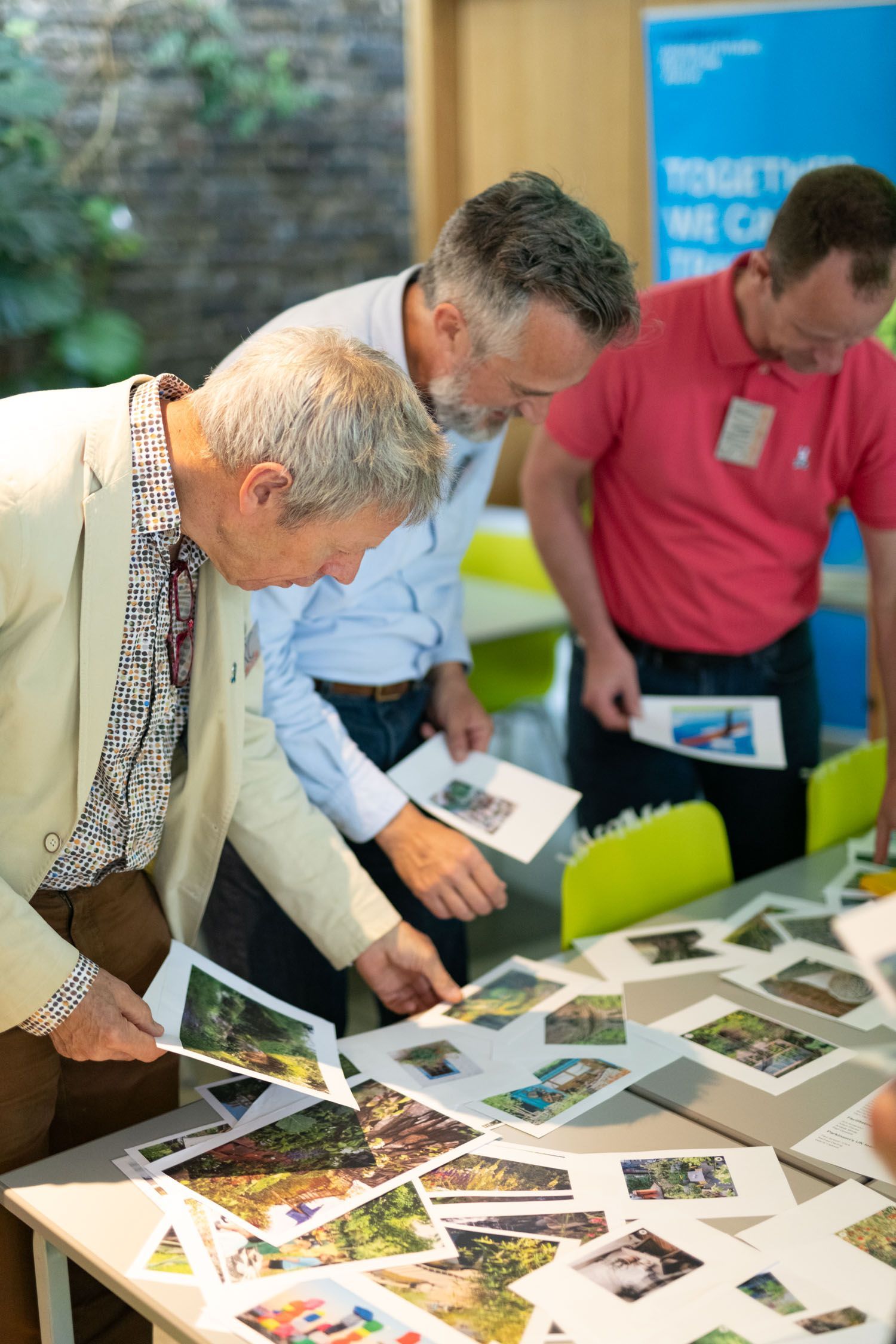
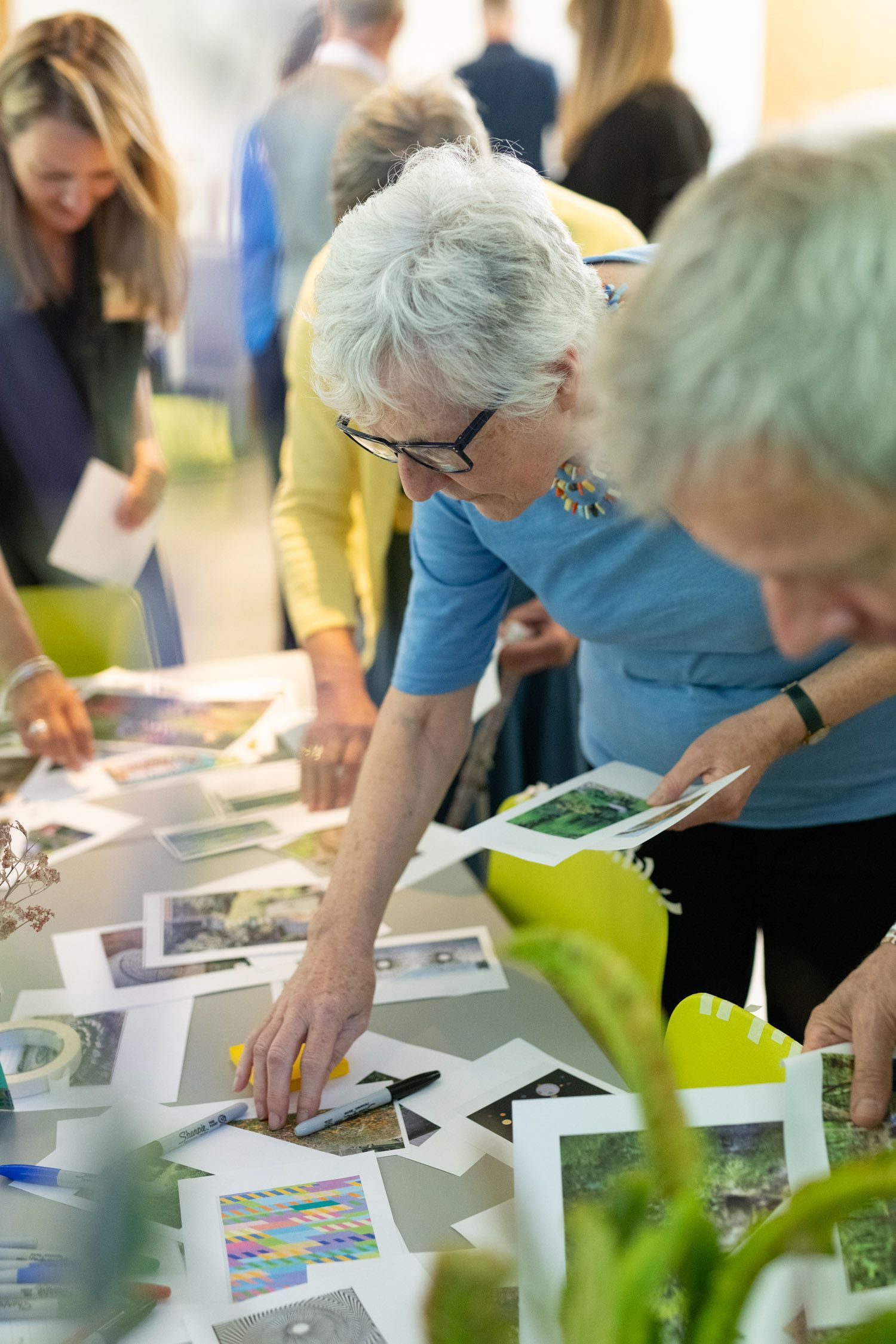
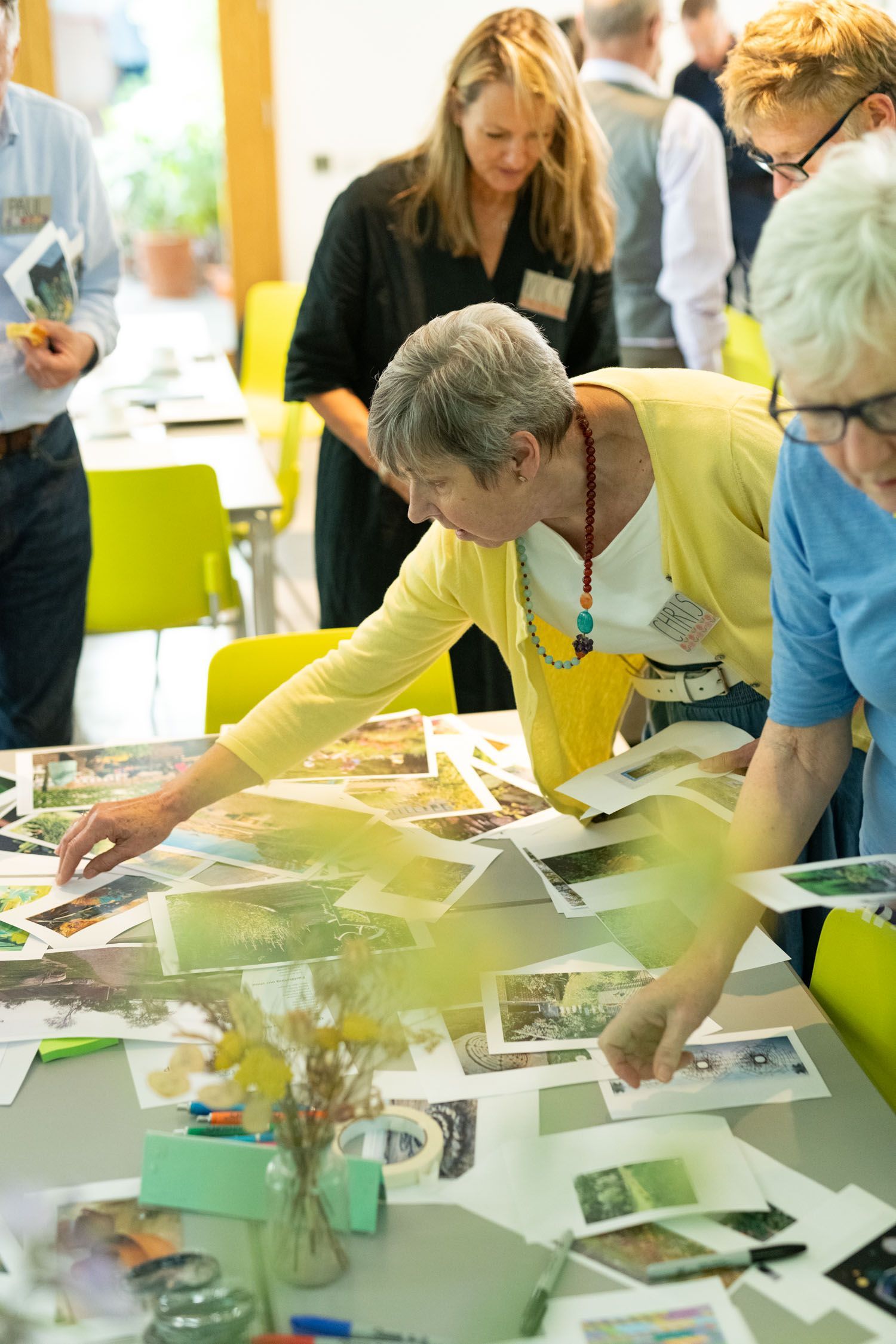
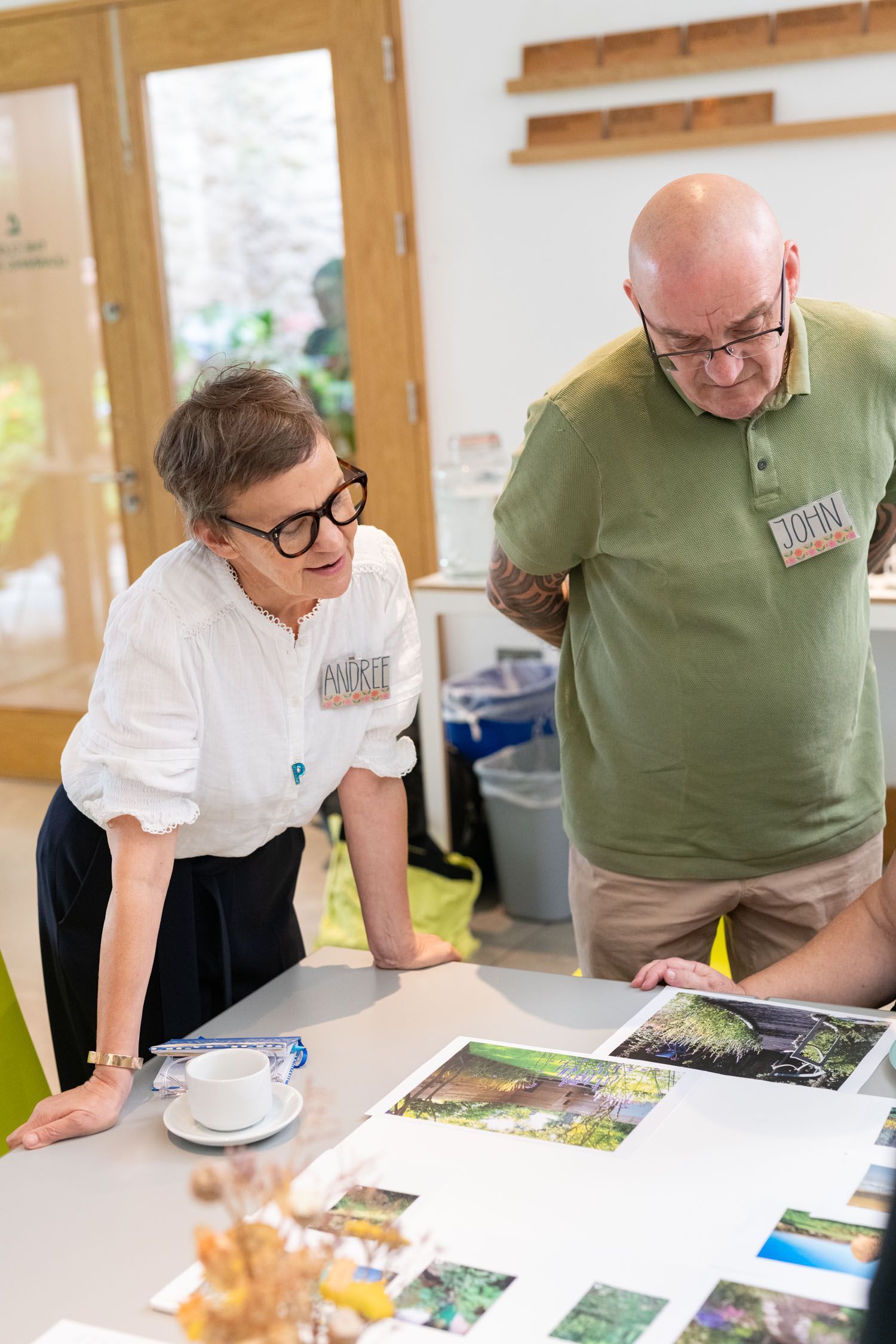
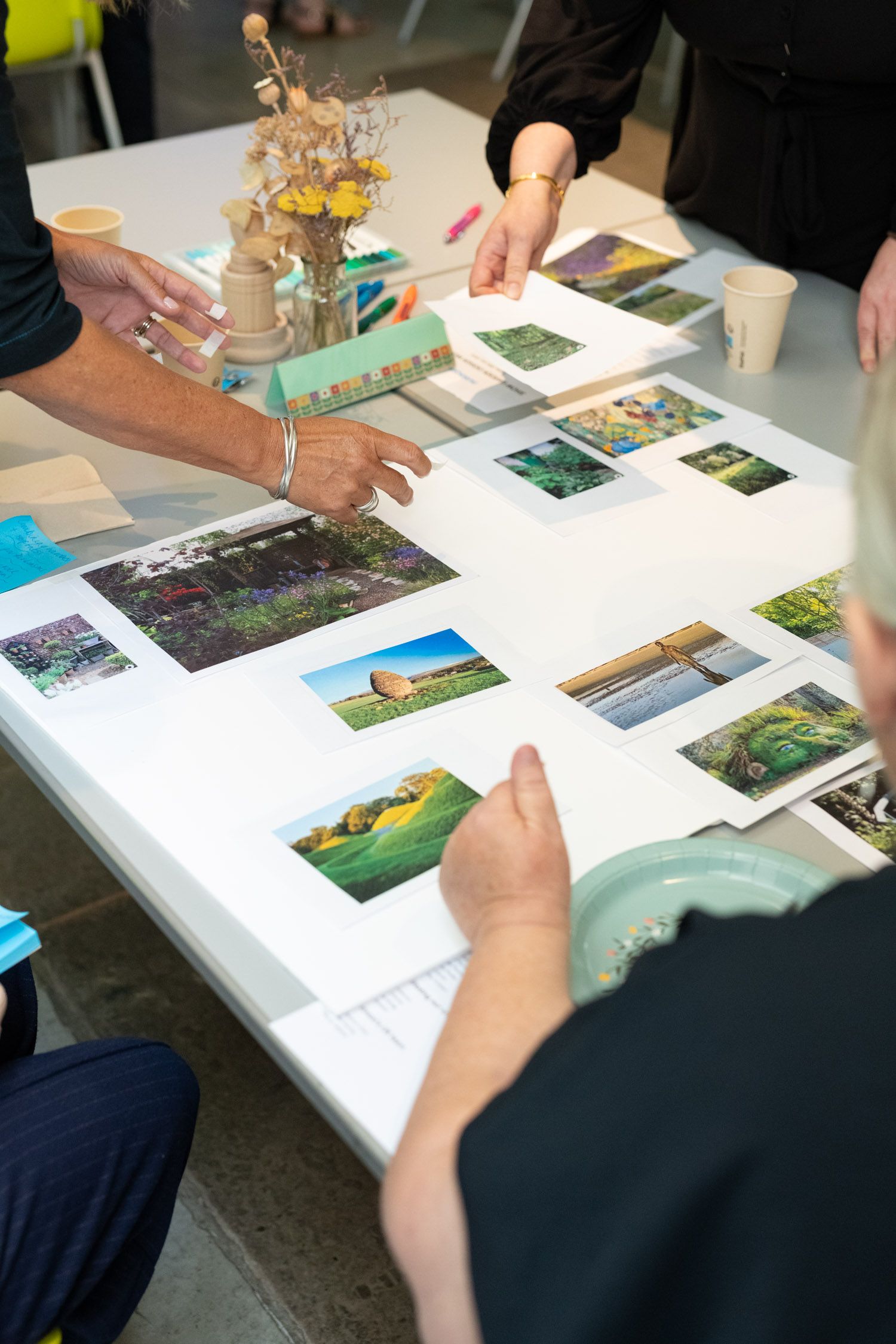
Working individually and in small groups, participants were invited to select images from a curated collection.
These included gardens, landscapes, artworks and natural scenes. The exercise encouraged instinctive responses rather than technical thinking.
Participants discussed what they were drawn to, what they liked or disliked, and the reasons behind those choices.
This process revealed important themes:
- the emotional role of gardens as places of refuge
- the importance of familiarity and memory
- preferences for certain forms, colours and atmospheres
By starting with instinct and personal response, the session established a foundation rooted in lived experience rather than assumption.
Session 2: Understanding Planting and Sensory Experience
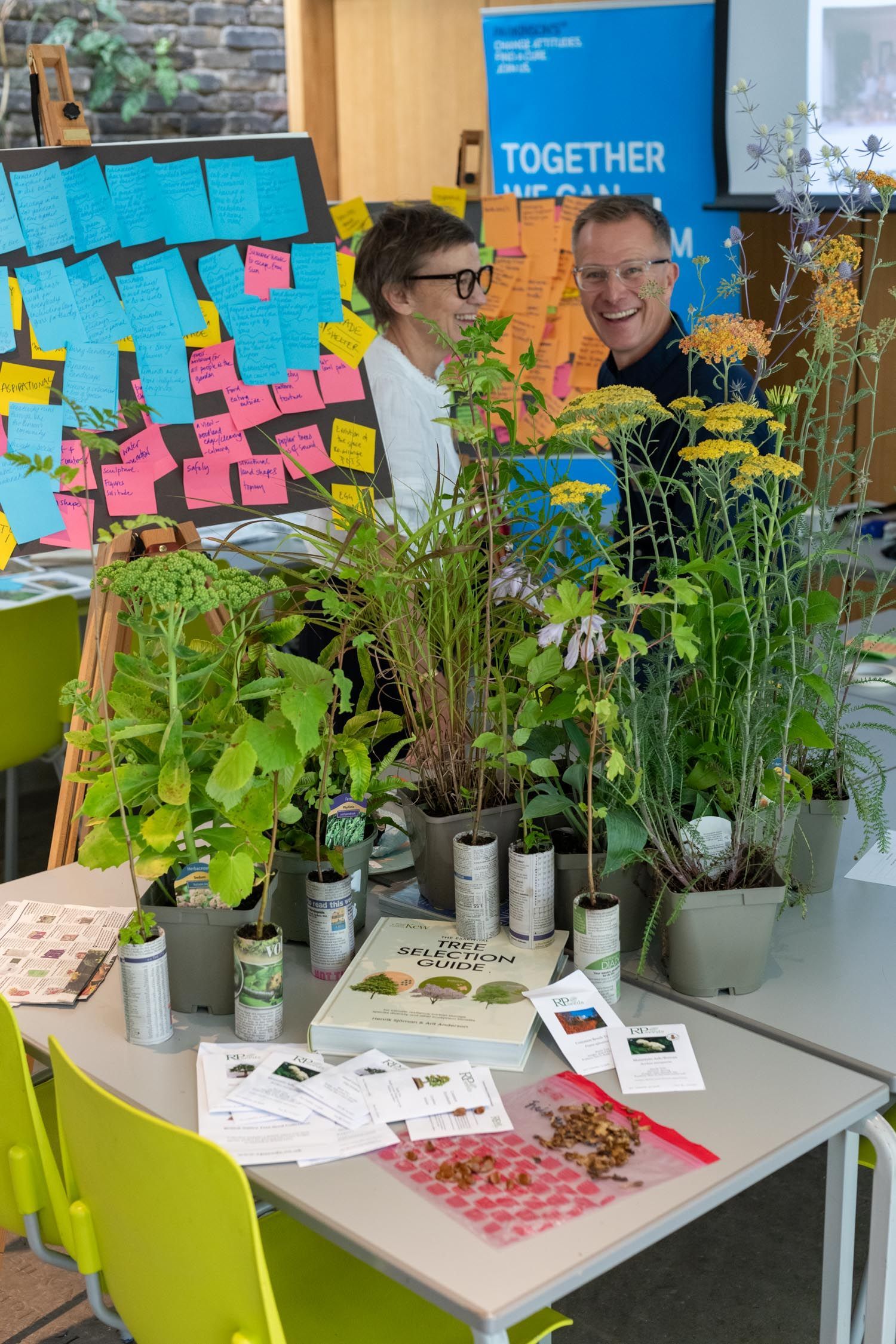
The second session introduced participants to the way designers think about planting. Using physical plant material, the team explored scale, texture, colour, structure and seasonality. Participants were invited to handle plants, discuss their own experiences and share favourite species.
This session moved the conversation from abstract ideas to tangible design elements. It also highlighted the complexity of sensory experience in Parkinson’s. While scent is often diminished or lost, other senses such as touch, sight and sound become more significant. Participants spoke about the importance of texture, movement and visual clarity, as well as the role of sound in supporting movement and orientation.
The session concluded with a practical activity, where participants created paper pots and planted seeds. This introduced a hands-on, creative element, reinforcing the connection between people and the act of growing.
Capturing Insight
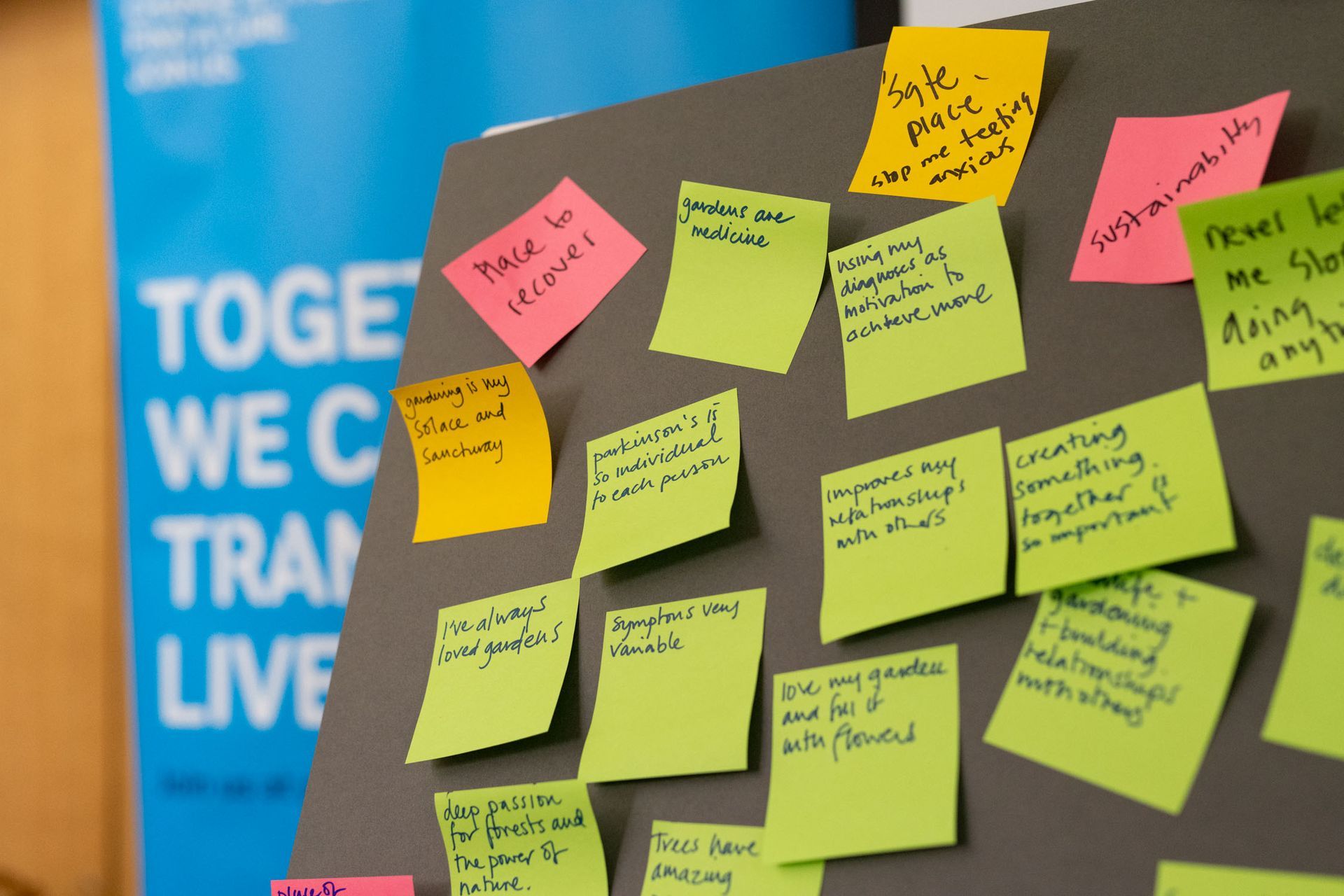
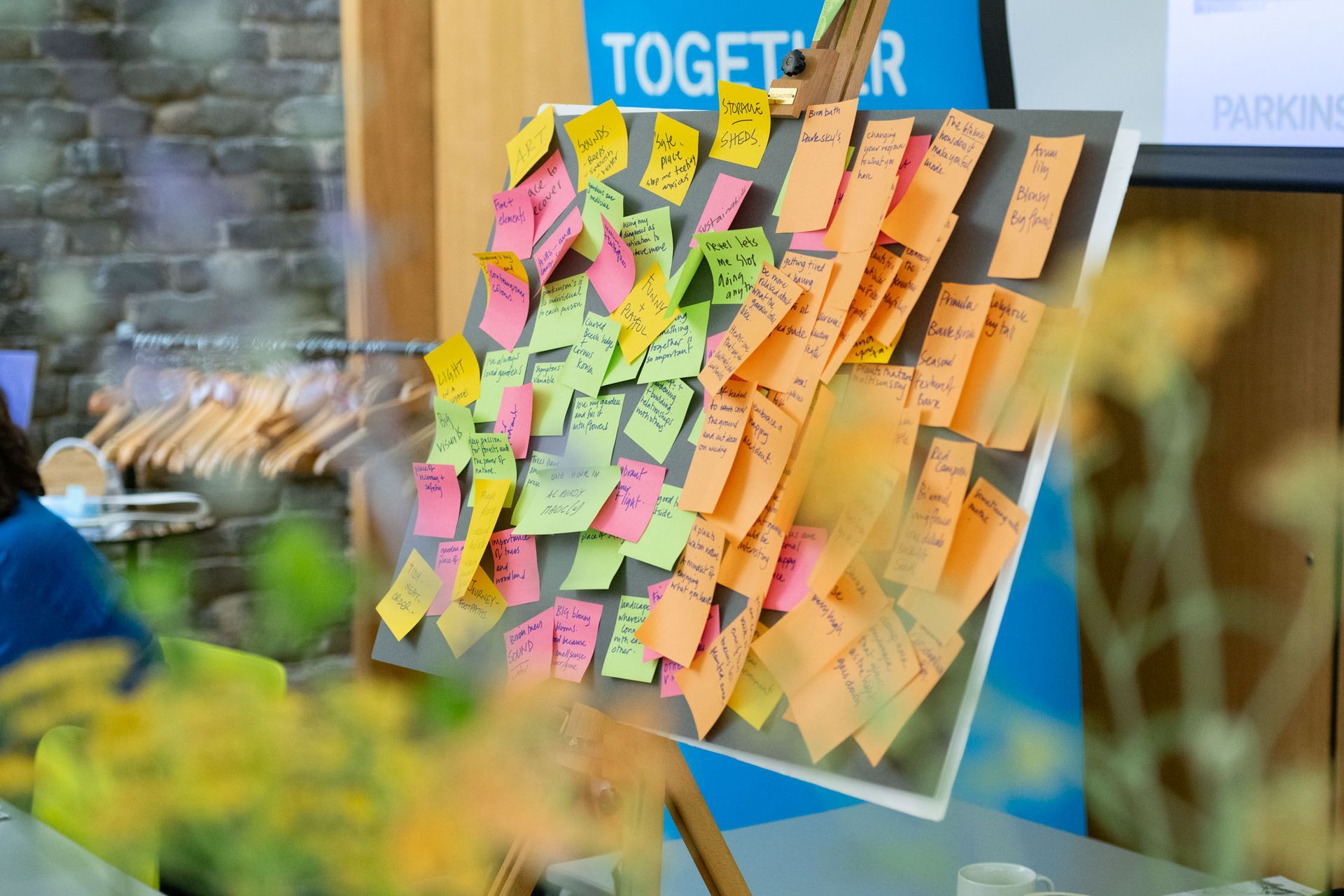
Throughout the day, facilitators captured participant feedback in real time, recording thoughts, observations and discussions on notes that were shared and reviewed collectively.
This visible process allowed participants to see their contributions being recognised and valued, while also building a shared understanding across the group. As the sessions progressed, patterns began to emerge. These were not imposed themes, but consistent ideas expressed by multiple participants from different perspectives.

A Repeatable Process
While this workshop was developed specifically in response to Parkinson’s, the approach itself is adaptable.
The structure of the day, the use of creative exercises, and the translation of lived experience into clear design principles can be applied across a wide range of contexts. This includes projects for people living with dementia, those with visual or hearing impairments, neurodivergent communities, and individuals undergoing medical treatment or rehabilitation. In each case, the process begins in the same way: by creating the conditions for people to share how they experience space, and ensuring that those insights are carried through into design.
From Engagement to Impact
The value of this approach lies in what happens next. The principles developed through the workshop did not remain as a record of the day. They became the foundation for a garden that will be experienced by thousands of people, first at RHS Chelsea Flower Show and then as a permanent landscape at John Radcliffe Hospital. This demonstrates the role that structured engagement can play in shaping environments that are not only well designed, but genuinely responsive to the people who use them.
Working with Davies White
Davies White works with organisations across healthcare, education and community sectors to design and deliver structured engagement processes that translate lived experience into clear design principles.
Through carefully facilitated workshops, participants share how they experience space and what supports or challenges them.
This insight is captured and developed into a practical framework that informs design decisions, ensuring landscapes are inclusive, usable and grounded in real-world needs.
To discuss how a similar workshop could support your project, please get in touch.
Contact Us
We will get back to you as soon as possible.
Please try again later.